- Defining Tectonic Plates: What Are They?
- The Dynamic Dance: What Causes Plate Movement?
- Convection Currents
- Ridge Push and Slab Pull
- Types of Plate Boundaries: Where the Action Happens
- Divergent Boundaries
- Convergent Boundaries
- Transform Boundaries
- The Profound Impact: Why Tectonic Plates Matter
- Earthquakes and Volcanoes
- Mountain Building and Ocean Trenches
- Reshaping Continents and Climate
What are tectonic plates? They are the Earth’s mighty, moving puzzle pieces, silently shaping our world over unimaginable timescales. Far from being a static globe, our planet is a vibrant, dynamic entity, perpetually undergoing colossal transformations driven by forces deep within its interior. Understanding tectonic plates isn’t just about geology; it’s about grasping the very essence of Earth’s relentless evolution, responsible for everything from towering mountain ranges and vast ocean trenches to devastating earthquakes and spectacular volcanic eruptions.
Defining Tectonic Plates: What Are They?
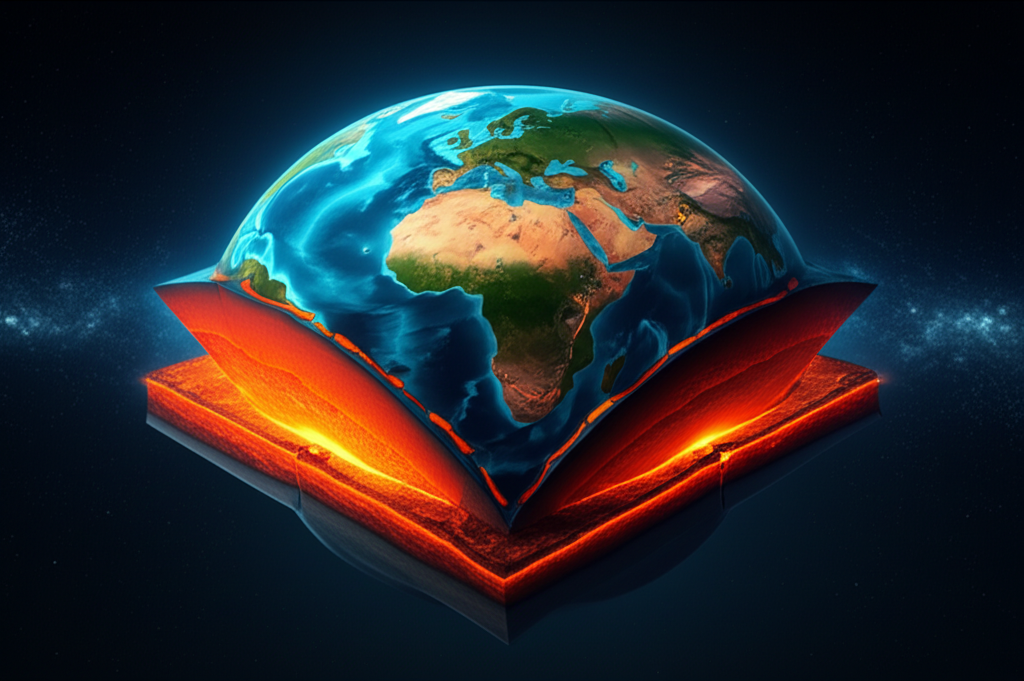
At its most fundamental level, the Earth is composed of several layers: the solid inner core, the liquid outer core, the thick, semi-solid mantle, and the thin, rocky crust. Tectonic plates are massive, irregularly shaped slabs of solid rock, comprising both the Earth’s crust and the uppermost part of the mantle. This rigid outer layer is collectively known as the lithosphere.
Think of the Earth’s surface like a cracked eggshell. These cracks divide the lithosphere into a mosaic of enormous and smaller plates. There are about seven major plates (like the Pacific, North American, Eurasian, African, Antarctic, Indo-Australian, and South American plates) and numerous minor plates. These plates are not fixed; they “float” on a hotter, denser, and more pliable layer of the upper mantle called the asthenosphere. This semi-fluid layer allows the overlying lithospheric plates to move, albeit at frustratingly slow speeds for human observers – typically just a few centimeters per year, about the same rate as fingernail growth.
The Dynamic Dance: What Causes Plate Movement?
The motion of tectonic plates is not random; it’s driven by powerful forces originating within the Earth’s scorching interior. This continuous movement is the engine behind virtually all major geological phenomena we observe.
Convection Currents
The primary driver of plate tectonics is thought to be convection currents within the Earth’s mantle. Heat generated from the radioactive decay of elements in the core and mantle causes the semi-fluid rock in the asthenosphere to slowly churn. Hotter, less dense material rises towards the surface, cools, becomes denser, and then sinks back down, creating a slow, convection cell cycle. These immense currents act like conveyor belts, slowly dragging the overlying tectonic plates along with them.
Ridge Push and Slab Pull
While convection currents provide the fundamental motion, two additional forces contribute significantly:
Ridge Push: At divergent plate boundaries (where plates pull apart), magma rises to fill the gap, creating new oceanic crust. This new crust is hot and less dense, forming an elevated “ridge.” As it cools, it becomes denser and slides down the gentle slope away from the ridge crest under the force of gravity, effectively “pushing” the plate.
Slab Pull: This is considered the strongest driving force. At convergent plate boundaries (where plates collide), one plate often buckles and plunges beneath the other into the mantle – a process called subduction. The cold, dense, sinking slab of oceanic lithosphere pulls the rest of the plate along with it into the mantle, much like a heavy anchor pulling a chain.
Types of Plate Boundaries: Where the Action Happens
The interactions between tectonic plates are most dramatic and geologically significant along their boundaries. There are three primary types of plate boundaries, each associated with distinct geological features and hazards:
Divergent Boundaries
At divergent boundaries, plates are moving apart from each other. As the plates separate, magma from the mantle rises to fill the void, creating new crustal material.
Features: Mid-ocean ridges (like the Mid-Atlantic Ridge), rift valleys (like the East African Rift Valley), volcanoes, and shallow earthquakes.
Example: The separation of the North American and Eurasian Plates formed the Mid-Atlantic Ridge.
Convergent Boundaries
At convergent boundaries, plates are moving towards each other, resulting in collisions or subduction. The outcome depends on the type of crust involved:
Oceanic-Continental Convergence: Denser oceanic crust plunges beneath the lighter continental crust (subduction).
Features: Deep ocean trenches (e.g., Peru-Chile Trench), volcanic mountain ranges on the continent (e.g., Andes Mountains), and powerful earthquakes.
Oceanic-Oceanic Convergence: One oceanic plate subducts beneath another.
Features: Deep ocean trenches (e.g., Mariana Trench), volcanic island arcs (e.g., Japan, Aleutian Islands), and strong earthquakes.
Continental-Continental Convergence: Neither continental plate is dense enough to subduct significantly, leading to a massive collision.
Features: Immense folded mountain ranges with complex faulting and deformation (e.g., Himalayas formation from the collision of the Indian and Eurasian plates), and abundant earthquakes.
Transform Boundaries
At transform boundaries, plates slide horizontally past each other, without significant creation or destruction of crustal material.
Features: Fault lines, shallow but often very powerful earthquakes (due to friction between the grinding plates), and minimal volcanism.
Example: The San Andreas Fault in California, where the Pacific Plate slides past the North American Plate.
The Profound Impact: Why Tectonic Plates Matter
The seemingly slow and imperceptible movement of tectonic plates has profound implications for our planet, shaping its surface and influencing its geological activity.
Earthquakes and Volcanoes
The vast majority of earthquakes and volcanoes occur along plate boundaries. Earthquakes are caused by the sudden release of built-up stress as plates grind, slide, and collide. Volcanoes form when magma rises to the surface, most commonly at divergent boundaries (mid-ocean ridges) and convergent boundaries (subduction zones).
Mountain Building and Ocean Trenches
The Earth’s most dramatic topographical features are direct results of plate tectonics. The towering peaks of the Himalayas, Andes, and Alps are monuments to continental collisions. The deepest parts of our oceans, like the Mariana Trench, are formed at subduction zones where one plate dives beneath another.
Reshaping Continents and Climate
Over geological timescales, plate tectonics has dramatically reshaped the Earth’s continents, moving them from one supercontinent (like Pangea) to their current positions. This constant continental drift influences ocean currents, atmospheric circulation, and ultimately, global climate patterns and the distribution of life on Earth. Even the release of greenhouse gases from volcanic activity can impact long-term climate.
From the shudder of an earthquake to the slow uplift of a mountain range, the invisible yet undeniable forces of tectonic plates are a fundamental truth of our planet. They underscore Earth’s dynamic nature, reminding us that we reside on a living, breathing world, constantly being sculpted by processes that began billions of years ago and continue tirelessly beneath our feet.
0 Comments