- What Are Black Holes, Exactly?
- The Unseen, Yet Powerful: How We Detect Them
- Beyond the Horizon: What Happens Within?
- Unveiling What We Still Don't Know
- Current Research and Future Prospects
What defines the cosmos and challenges our understanding more profoundly than the black hole? These enigmatic regions of spacetime, where gravity is so intense that nothing, not even light, can escape, represent the ultimate frontiers of physics. For centuries, black holes were purely theoretical constructs, mathematical oddities in Einstein’s equations. Today, thanks to groundbreaking observations and theoretical breakthroughs, we’re beginning to unveil some of the deepest mysteries surrounding these cosmic behemoths, revealing that their impact stretches far beyond their immediate vicinity, shaping galaxies and potentially holding clues to the very fabric of reality.
What Are Black Holes, Exactly?
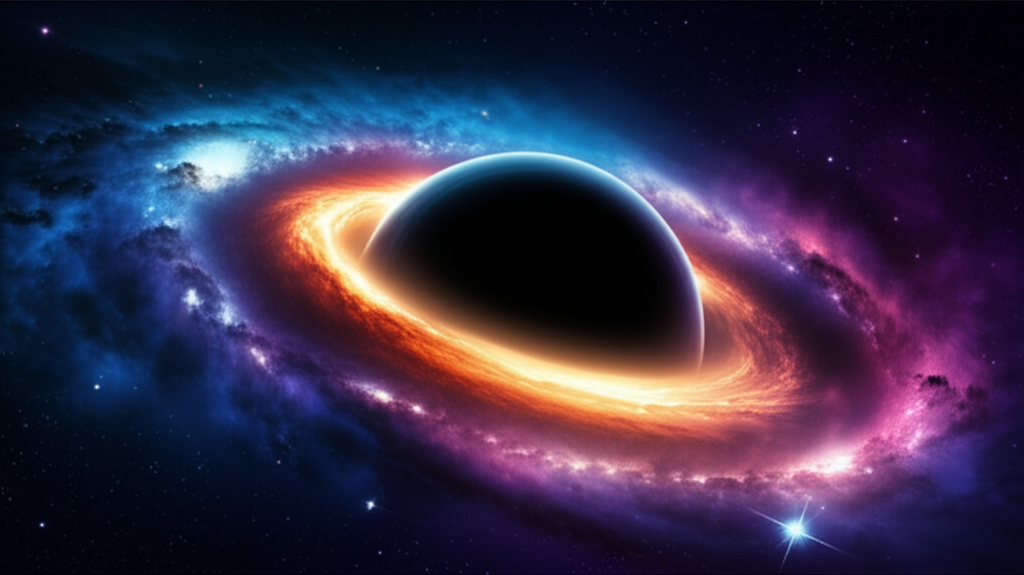
At their core, black holes are astronomical objects characterized by an event horizon from which matter and light cannot escape. They aren’t “holes” in the traditional sense, but rather incredibly dense concentrations of mass within a very small volume. The popular image of a cosmic vacuum cleaner is misleading; a black hole’s gravitational pull is only truly inescapable once an object crosses its event horizon. Outside this boundary, its gravity behaves much like any other massive object.
There are primarily two types of black holes that scientists routinely study:
Stellar-mass black holes: Formed from the gravitational collapse of massive stars (typically 20 times the mass of our Sun or more) at the end of their lives. When a star runs out of nuclear fuel, its core can no longer withstand the immense inward pressure of its own gravity and implodes, leading to a supernova explosion that leaves behind a black hole.
Supermassive black holes: These giants, millions to billions of times the mass of our Sun, reside at the centers of nearly every large galaxy, including our own Milky Way, which hosts Sagittarius A. Their formation mechanism is still an active area of research, but they are thought to grow by accreting gas, dust, and even other stars, and by merging with other black holes.
The Unseen, Yet Powerful: How We Detect Them
Given that black holes emit no light, how do we know they exist? The answer lies in their profound gravitational influence on their surroundings. Scientists detect black holes through several indirect methods:
Gravitational Effects: We observe the extreme gravitational pull on nearby stars and gas. For instance, stars orbiting an invisible, massive object at tremendous speeds indicate the presence of a black hole. This method led to the discovery of Sagittarius A.
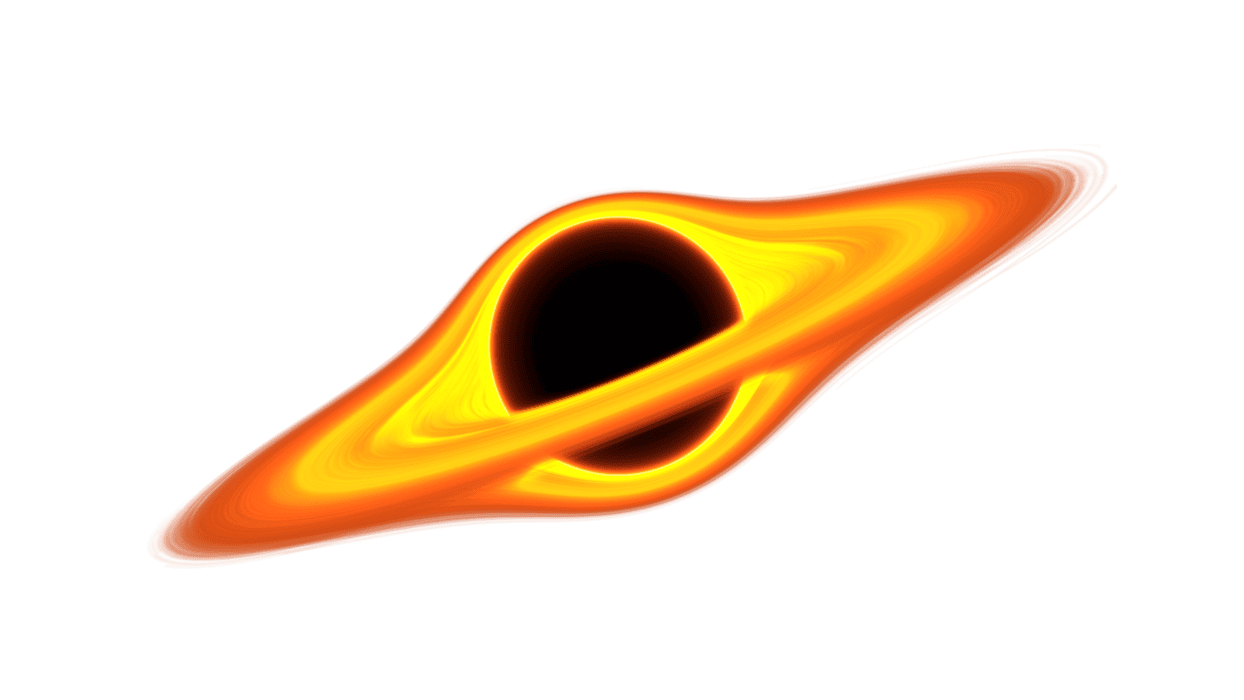
Accretion Disks and X-ray Emission: As gas and dust spiral into a black hole, they form an accretion disk. Friction within this swirling material heats it to millions of degrees, causing it to emit powerful X-rays, which telescopes can detect. This process provides some of the most dramatic evidence for stellar-mass black holes in binary systems.
Gravitational Waves: The most recent and revolutionary detection method came with the LIGO and Virgo observatories, which detected ripples in spacetime—gravitational waves—generated by the spiraling and merging of two black holes. This confirmed a major prediction of Einstein’s theory of general relativity and opened a new window into the universe.
Beyond the Horizon: What Happens Within?
Crossing the black hole’s event horizon marks a point of no return. What truly happens inside remains one of the greatest mysteries, challenging our very understanding of physics.
The Singularity: At the heart of every black hole, general relativity predicts an infinitely dense point called the singularity, where spacetime itself is thought to break down. Here, our current laws of physics, which don’t account for quantum effects, utterly fail. Understanding the singularity requires a theory of quantum gravity, which scientists are still striving to develop.
Spaghettification: For an object crossing a stellar-mass black hole’s event horizon, the immense tidal forces would be devastating. The gravitational pull on the part of the object closer to the black hole would be significantly stronger than on the part farther away, stretching it into a long, thin strand—a process vividly termed “spaghettification.”
The Information Paradox: Perhaps the most perplexing mystery is the information paradox. Quantum mechanics states that information about particles can never be truly lost. However, if an object falls into a black hole, its information seems to disappear beyond the event horizon. Stephen Hawking’s theory of Hawking radiation suggests that black holes slowly evaporate over billions of years by radiating particles. If they truly evaporate, what happens to the information of everything they consumed? Does it simply vanish, violating a fundamental principle of quantum physics, or is it encoded in the Hawking radiation in some unfathomable way? This profound conflict between general relativity and quantum mechanics remains a central battleground in theoretical physics.
Unveiling What We Still Don’t Know
Despite significant progress, the universe of black holes holds countless unanswered questions. We’re still grappling with:
The Precise Nature of the Singularity: What replaces the singularity when quantum mechanics is considered? Is it a “fuzzball” as string theory suggests, or something else entirely?
The Origin of Supermassive Black Holes: How did these cosmic giants form so quickly in the early universe, seemingly before their host galaxies fully developed? Do “direct collapse” black holes seed galaxy formation?
The Role of Black Holes in Dark Matter: While separate entities, some speculative theories explore exotic connections, for example, if primordial black holes formed in the early universe constitute a fraction of dark matter.
The Possibility of Wormholes: While highly speculative and largely relegated to science fiction, some interpretations of general relativity allow for “wormholes” – theoretical tunnels through spacetime that could connect distant points. Whether these could ever form or be traversable remains a profound question.
Current Research and Future Prospects
The quest to understand black holes is a vibrant frontier of science. The Event Horizon Telescope has provided us with the first direct images of a black hole’s shadow, offering unprecedented insights into regions close to the event horizon. Gravitational wave astronomy continues to push boundaries, promising observations of supermassive black hole mergers and testing general relativity in extreme conditions. Theoretical physicists continue to refine theories of quantum gravity, hoping to reconcile the paradoxes and unify our understanding of the universe at its most fundamental level.
In essence, black holes are not just cosmic oddities; they are cosmic laboratories. They push the boundaries of spacetime, gravity, and quantum mechanics, forcing us to re-evaluate our deepest assumptions about the universe. As we continue to probe their mysteries, we are not just learning more about black holes themselves, but also about the very laws that govern existence, inching closer to an ultimate understanding of our extraordinary cosmos.
0 Comments