- What Exactly is a Supernova?
- The Two Paths to Ultimate Devastation: Type I and Type II Supernovae
- Type II Supernovae: The Collapse of Massive Stars
- Type Ia Supernovae: The Violent End of White Dwarfs
- What Happens After the Explosion? Cosmic Forging and Legacy
- Observing Supernovae: Our Window into the Universe
What lies at the heart of the universe’s most spectacular and devastating events? The answer, for many, is a supernova—a stellar explosion that marks the violent death of a star. Far from being merely a destructive force, these cosmic cataclysms are fundamental to the creation of new elements, the formation of planets, and even the existence of life itself. Understanding what causes a supernova offers us a profound glimpse into the lifecycle of stars and the dynamic nature of the cosmos.
What Exactly is a Supernova?
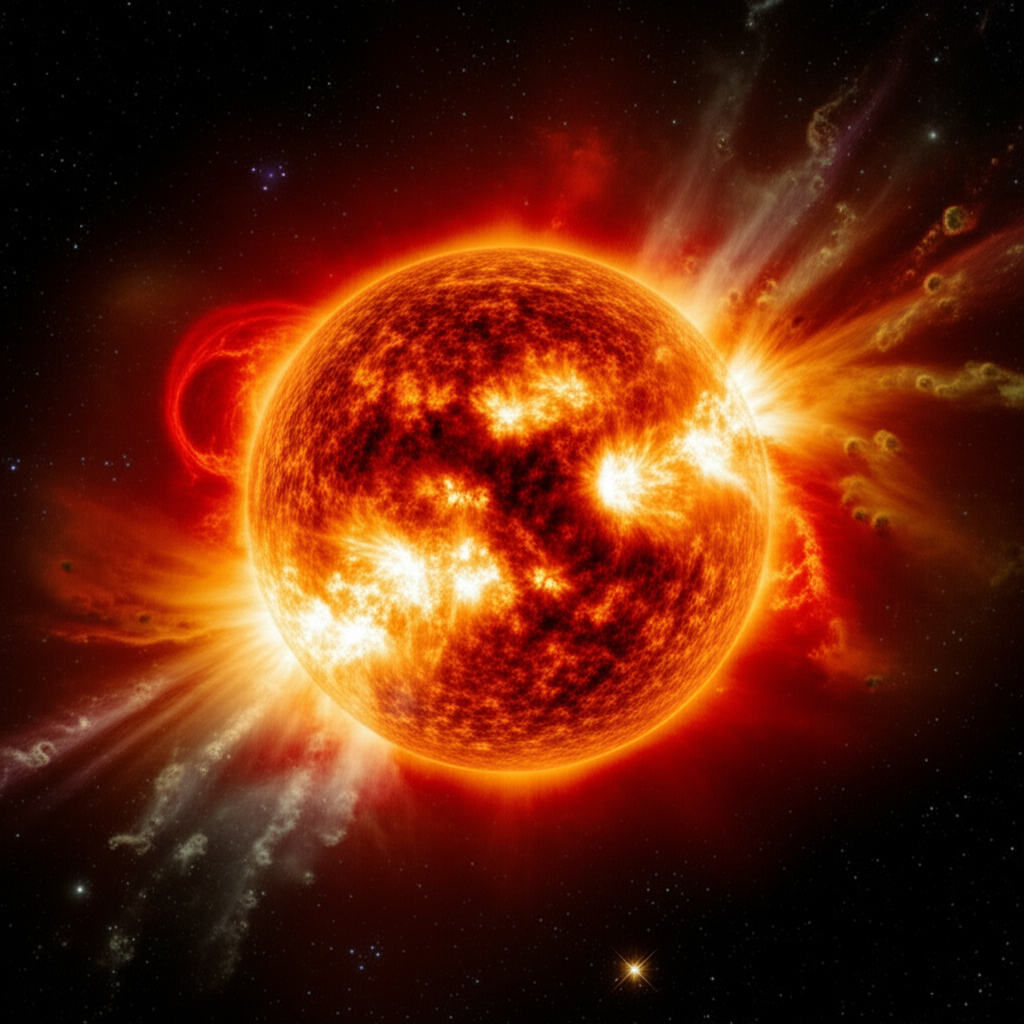
At its core, a supernova is an incredibly powerful and luminous stellar explosion. For a fleeting period, a single supernova can outshine an entire galaxy, radiating as much energy in a few weeks as our Sun will emit over its entire 10-billion-year lifespan. This immense burst of light and energy is not just a dazzling display; it’s a crucial mechanism for distributing heavy elements throughout the universe. Without supernovae, the raw materials for rocky planets, and carbon-based life, would simply not exist. There are primarily two distinct pathways leading to these ultimate acts of stellar destruction.
The Two Paths to Ultimate Devastation: Type I and Type II Supernovae
The specific mechanisms that trigger a supernova event determine its classification. While both result in an apocalyptic explosion, the scenarios leading up to them are vastly different, involving either the colossal collapse of a massive star or the runaway nuclear fusion of a dying white dwarf.
Type II Supernovae: The Collapse of Massive Stars
This is perhaps the more intuitive image of a star’s dramatic demise. Type II supernovae occur when a star at least eight times more massive than our Sun exhausts its nuclear fuel. Throughout its life, such a massive star undergoes a series of fusion processes in its core, progressively fusing lighter elements into heavier ones: hydrogen into helium, helium into carbon, carbon into neon, and so on, building up layers like an onion.
The problem arises when the star’s core begins to fuse silicon into iron. Iron is unique in that its fusion consumes energy rather than releasing it. When the core becomes overwhelmed with iron, it can no longer generate the outward pressure needed to counteract the star’s immense gravitational pull. In a fraction of a second, the core collapses inwards at incredible speeds, forming an incredibly dense neutron star.
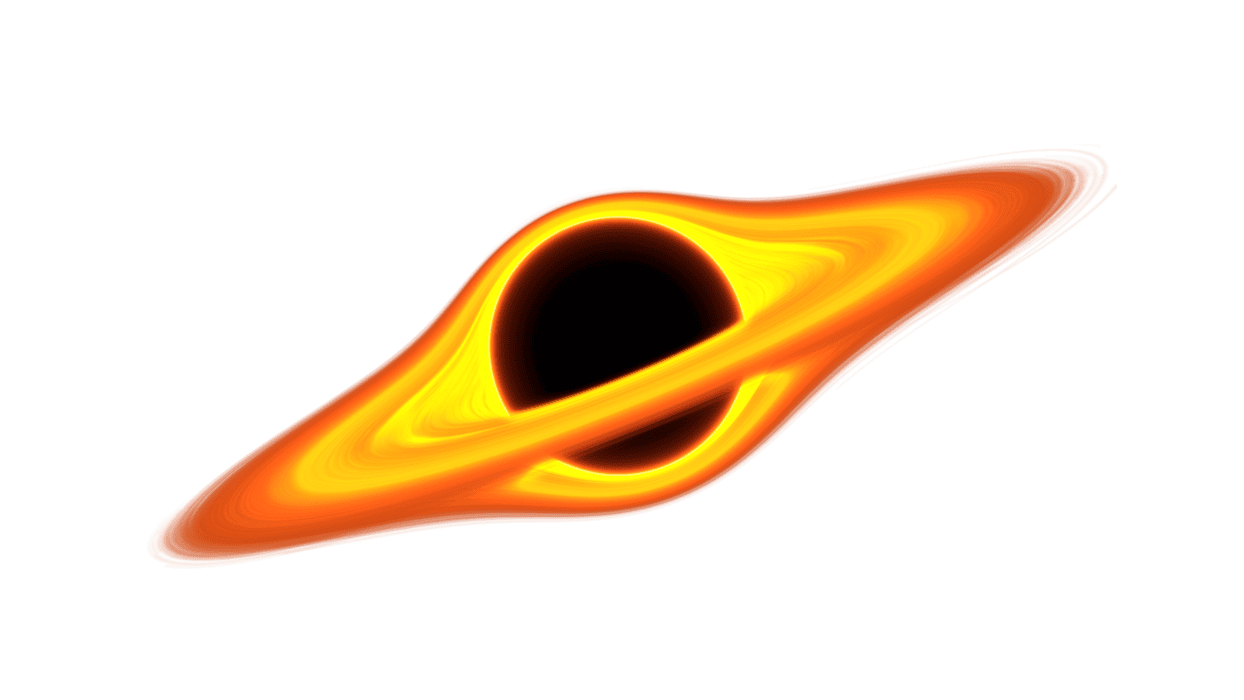
The sudden inward collapse causes the outer layers of the star to fall onto the newly formed, super-dense core and then violently rebound, creating a powerful shockwave. This shockwave propagates outwards, tearing through the remaining stellar material and expelling it into space in a brilliant, cataclysmic explosion. What remains is either a neutron star or, if the initial star was exceptionally massive, the core continues to collapse past the neutron star stage, forming a black hole.
Type Ia Supernovae: The Violent End of White Dwarfs
Unlike their Type II counterparts, Type Ia supernovae don’t involve a single massive star. Instead, they arise from a particular kind of binary star system. They are the fiery swansong of a white dwarf – the dense, hot remnant core of a star like our Sun, which has shed its outer layers and is no longer undergoing nuclear fusion.
In a binary system, a white dwarf can orbit close to a companion star. If the companion star expands in its evolutionary phase, the white dwarf’s intense gravity can begin to accrete, or siphon, material (primarily hydrogen and helium) from its neighbor. This stolen material slowly builds up on the white dwarf’s surface.
As the white dwarf gains mass, its internal pressure and temperature climb relentlessly. When its mass approaches a critical threshold known as the Chandrasekhar Limit (about 1.4 times the mass of our Sun), the immense pressure triggers a runaway nuclear fusion reaction within its carbon-oxygen core. This ignition is not gradual; it’s a sudden, thermonuclear explosion that engulfs the entire white dwarf star, utterly obliterating it. Unlike Type II supernovae, there is no remnant left behind – the white dwarf is completely destroyed. These events are particularly important to astronomers because they are thought to have a consistent peak luminosity, making them “standard candles” for measuring vast cosmic distances.
What Happens After the Explosion? Cosmic Forging and Legacy
The aftermath of a supernova is as spectacular and significant as the explosion itself. The expanding cloud of gas and dust left behind is known as a supernova remnant. These remnants, like the famous Crab Nebula, are not merely fading embers; they are dynamic factories of creation.
The extreme temperatures and pressures within the explosion itself are responsible for forging many of the heavier elements in the universe – elements heavier than iron, such as gold, silver, uranium, and lead. These newly synthesized elements, along with vast quantities of lighter elements, are then flung out into interstellar space by the expanding shockwave.
This dispersal of elements is crucial. These heavy elements seed nebulae, enriching the cosmic gas and dust clouds from which new generations of stars and planetary systems will form. Every atom of iron in your blood, every speck of carbon in your body, every bit of silicon in the Earth’s crust, was once forged in the heart of a dying star and dispersed by a supernova. We are, quite literally, stardust. Furthermore, some of the most powerful explosions in the universe, Gamma-Ray Bursts (GRBs), are thought to be associated with extreme cases of Type II supernovae, particularly those involving rapidly spinning, massive stars.
Observing Supernovae: Our Window into the Universe
Supernovae are relatively rare events in any given galaxy, occurring roughly once every few decades in a galaxy like the Milky Way. However, thanks to powerful telescopes, astronomers routinely observe them in distant galaxies. Studying the light curves and spectral fingerprints of these stellar titans provides invaluable information about stellar evolution, the expansion rate of the universe, and the fundamental physics of extreme environments. Each new observation refines our understanding of these ultimate displays of cosmic power.
In conclusion, the causes of supernovae reveal profound insights into the stellar lifecycle and the very fabric of the cosmos. Whether it’s the inevitable gravitational collapse of a massive star’s iron core or the thermonuclear immolation of an overfed white dwarf, these explosions are more than just spectacles of ultimate devastation. They are vital engines of cosmic evolution, responsible for synthesizing and distributing the essential building blocks that pave the way for new stars, new planets, and ultimately, new life.
0 Comments