
- Understanding Your Carbon Footprint: The First Step
- Home Sweet Eco-Home: How to Reduce Emissions at Home
- On the Move: How Smart Travel Choices Cut Carbon
- Plate Power: How Food Choices Impact Emissions
- Conscious Consumption: How Thoughtful Purchases Make a Difference
- Advocacy and Influence: How to Amplify Your Impact
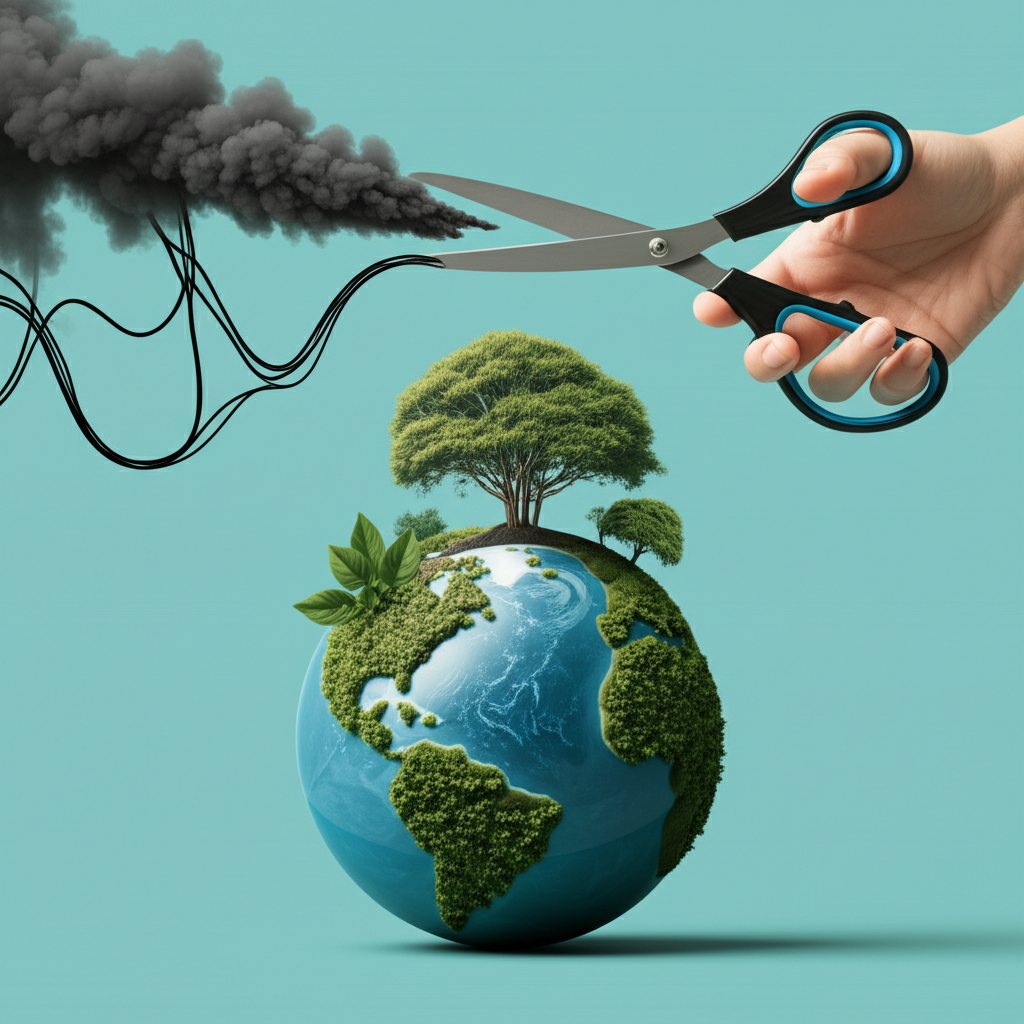
How can we tackle the daunting challenge of climate change without feeling overwhelmed? The answer lies in recognizing that slashing carbon emissions doesn’t require a complete overhaul of your life. Instead, it’s about making a series of informed, often surprisingly simple choices that, when aggregated, create a powerful ripple effect. Reducing your carbon footprint can be an effortless journey towards a more sustainable lifestyle, benefiting not only the planet but often your wallet and well-being too.
Carbon emissions, primarily from the burning of fossil fuels, are the leading driver of global warming. While systemic change is crucial, individual actions play a significant role in creating demand for sustainable practices and demonstrating the viability of a low-carbon future. The good news is that many everyday habits can be tweaked to make a substantial difference without feeling like a sacrifice.
Understanding Your Carbon Footprint: The First Step
Before you can effectively reduce your impact, it helps to understand where your emissions predominantly come from. A carbon footprint is essentially the total amount of greenhouse gases (including carbon dioxide and methane) generated by your actions. Common contributors include electricity use, transportation, diet, and consumption habits. Several online calculators can help you gauge your current footprint, providing valuable insights into areas where you can make the most significant improvements. This isn’t about guilt; it’s about gaining clarity to empower your efforts.
Home Sweet Eco-Home: How to Reduce Emissions at Home
Your home is a major source of carbon emissions, primarily through energy consumption. Making it more energy-efficient is one of the most impactful and often cost-effective ways to cut down.
Energy Efficiency Upgrades: Simple fixes like sealing drafts, adding insulation, and switching to LED lighting can drastically reduce heating and cooling demands. Consider smart thermostats that learn your habits and optimize temperature settings, saving energy effortlessly.
Unplug and Save: Many electronics draw “phantom” power even when turned off but still plugged in. Unplugging chargers and appliances when not in use, or using power strips with on/off switches, can prevent this silent energy drain.
Embrace Renewable Energy: If available in your area, switch to a green energy provider that sources electricity from renewable sources like solar or wind. For homeowners, installing solar panels can virtually eliminate your electricity-related emissions and offer long-term financial savings.
Mindful Appliance Use: Run dishwashers and washing machines only when full, use cold water settings, and air-dry clothes when possible. These small shifts require minimal effort but yield considerable environmental benefits.
Waste Less, Emit Less: Reduce, reuse, recycle, and compost. Reducing consumption is paramount. Opt for reusable items over disposables, repair instead of replacing, and compost organic waste to divert it from landfills where it produces methane, a potent greenhouse gas.
On the Move: How Smart Travel Choices Cut Carbon
Transportation is another significant contributor to personal carbon footprints. Rethinking your commute and travel habits can lead to substantial reductions.
Walk, Bike, or Public Transport: For shorter distances, walking or cycling are not only zero-emission options but also great for your health. For longer commutes, embrace public transportation like buses, trains, or subways. Many cities offer robust networks that can replace car dependency.
Embrace Eco-Friendly Vehicles: If you need a car, consider electric vehicles (EVs) or hybrids. The accelerating development of EV technology makes them an increasingly viable and accessible option, especially when powered by renewable energy.
Carpool and Ride-Share: When driving is necessary, carpooling with colleagues or neighbors, or utilizing ride-sharing services, can reduce the number of individual vehicles on the road, thereby cutting emissions per person.
Conscious Flying: Air travel has a high carbon cost. If flying, choose direct flights, as most emissions occur during take-off and landing. Consider offsetting your carbon emissions through credible programs, though reducing flights remains the most effective strategy.
Plate Power: How Food Choices Impact Emissions
What you eat has a surprisingly large impact on the environment. Making conscious food choices can significantly lower your carbon footprint.
Shift Towards Plant-Rich Diets: The production of meat, particularly red meat, is highly resource-intensive, requiring vast amounts of land and water, and generating significant methane emissions. Incorporating more plant-based meals into your diet – even just a few days a week – can make a remarkable difference.
Buy Local and Seasonal: Food that travels fewer miles (food miles) generally has a lower carbon footprint. Support local farmers and opt for seasonal produce, which often requires less energy for storage and transportation.
Reduce Food Waste: Globally, a significant portion of food produced is wasted, contributing to emissions from decomposition in landfills. Plan your meals, store food properly, use leftovers creatively, and compost what you can’t eat.
Choose Sustainable Products: Look for ethically and sustainably sourced products, such as certified seafood or responsibly produced coffee, which minimize environmental damage.
Conscious Consumption: How Thoughtful Purchases Make a Difference
Beyond food, your general consumption habits have a profound impact.
Buy Less, Choose Well: The most sustainable product is often the one you don’t buy. Prioritize needs over wants, and when you do buy, invest in high-quality, durable items that are built to last, reducing the need for frequent replacements.
Embrace Second-Hand: Give items a second life by shopping at thrift stores, consignment shops, or online marketplaces. This reduces demand for new production and keeps usable items out of landfills.
Support Sustainable Brands: Research companies that prioritize environmental sustainability in their production processes, supply chains, and materials. Your purchasing power is a vote for responsible business practices.
Repair and Reuse: Instead of discarding broken items, explore options for repair. Many communities have repair cafes or local services that can fix electronics, clothing, and appliances, extending their lifespan.
Advocacy and Influence: How to Amplify Your Impact
Individual actions are powerful, but collective action amplifies that power exponentially.
Share Your Journey: Talk to friends, family, and colleagues about the changes you’re making and why. Personal stories are often more persuasive than statistics.
Engage with Your Community: Participate in local environmental initiatives, support community gardens, or organize a clean-up day.
Advocate for Policy Change: Support political leaders and policies that champion renewable energy, carbon pricing, sustainable infrastructure, and nature conservation. Sign petitions, contact your representatives, and vote for a greener future.
* Influence Your Workplace: Encourage your employer to adopt sustainable practices, from energy efficiency to waste reduction and green procurement.
Effortlessly slashing carbon emissions isn’t about perfection; it’s about progress. It’s about recognizing that every small, conscious choice matters and that integrating sustainable habits into your daily routine doesn’t have to be difficult. By taking these practical steps, you not only reduce your personal environmental impact but also inspire others, foster a culture of sustainability, and contribute to a healthier, more resilient planet for generations to come. Start small, be consistent, and watch your collective impact grow.
0 Comments