- Understanding the Basics: What Defines an Explosion?
- The Chemical Reaction at the Core: How Energy is Unleashed
- Deflagration vs. Detonation: A Tale of Two Speeds
- How Deflagration Works
- How Detonation Differs
- The Physics of Destruction: What Happens During an Explosion?
- Beyond the Chemical: Other Types of Explosions
- The Dangerous Truth: Impact and Mitigation
How do explosions, those sudden and overwhelming releases of energy, truly function? From the controlled blasts of demolition sites to the destructive power of a natural disaster, explosions are a fascinating yet terrifying display of physics and chemistry at their most extreme. While undeniably dangerous, understanding the mechanics behind these phenomena reveals a stunning truth about the fundamental forces that shape our world.
Understanding the Basics: What Defines an Explosion?
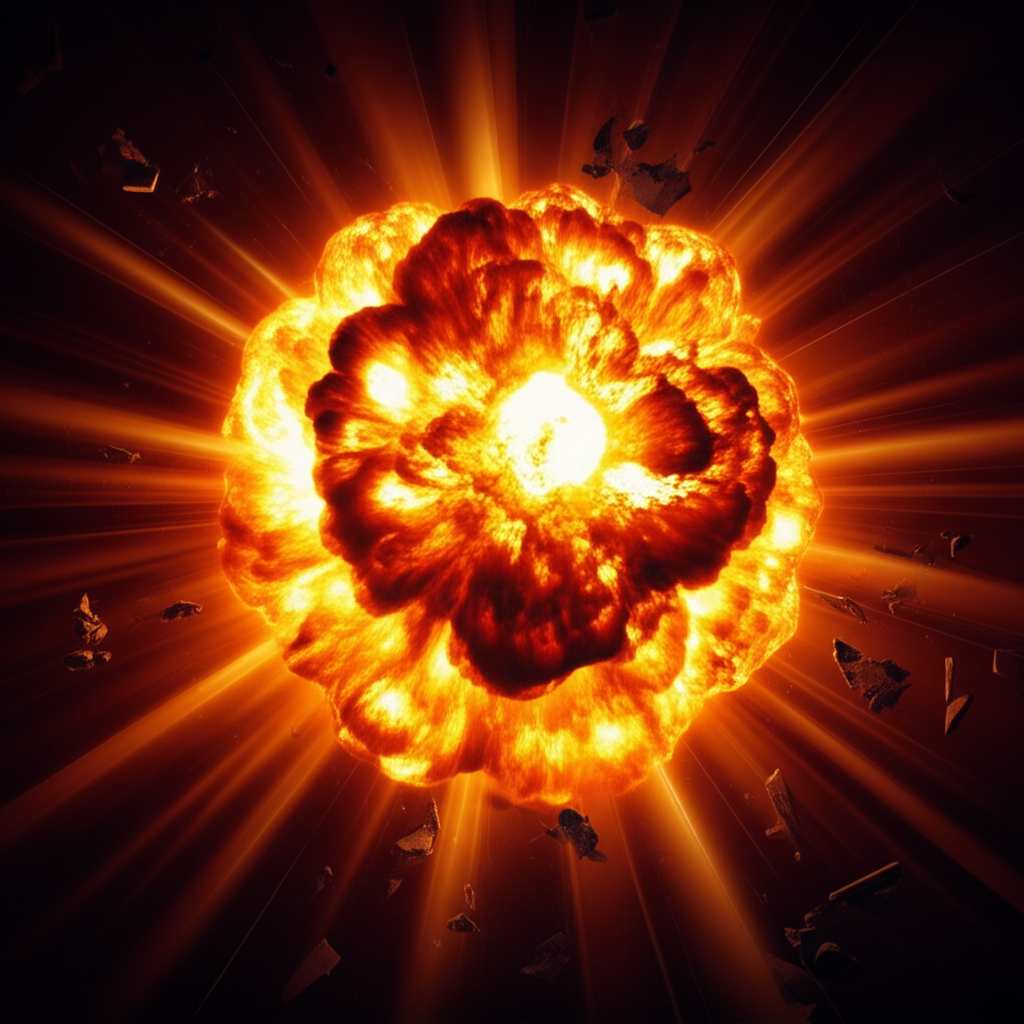
At its core, an explosion is a rapid expansion of matter into a significantly larger volume, accompanied by an intense release of energy in the form of heat, light, sound, and pressure. This rapid expansion creates a shockwave, which is the primary destructive force associated with most explosions. For an explosion to occur, several key components are typically required:
1. Fuel: A substance capable of rapid energy release, often combustible.
2. Oxidizer: A substance that reacts with the fuel, usually oxygen from the air.
3. Ignition Source: A trigger to initiate the reaction (e.g., spark, flame, heat).
4. Confinement (Optional but enhances power): If the reaction is contained, pressure builds up rapidly before being released, intensifying the shockwave.
The Chemical Reaction at the Core: How Energy is Unleashed
Most common explosions are chemical in nature, driven by exothermic reactions – reactions that release more energy than they absorb. Explosive materials, such as nitroglycerin, TNT, or gunpowder, are carefully engineered compounds designed to undergo rapid, self-sustaining chemical decomposition.
How these chemicals work: These substances contain a delicate balance of fuel and an oxidizer within their own molecular structure. When an ignition source provides enough initial energy (activation energy), the chemical bonds holding the molecule together are broken. This breaking of bonds, however, leads to the rapid formation of new, more stable bonds, often resulting in gaseous products like carbon dioxide, nitrogen, and water vapor. The key is that the energy released during the formation of these new, more stable bonds vastly exceeds the energy required to break the original ones. This excess energy is what manifests as the heat, light, and pressure of an explosion.
Deflagration vs. Detonation: A Tale of Two Speeds
Not all explosions are created equal. The speed at which the chemical reaction propagates through the material fundamentally distinguishes two main types: deflagration and detonation.
How Deflagration Works
Deflagration is a subsonic combustion process. This means the reaction front, or flame, moves through the explosive material slower than the speed of sound in that material. The pressure wave created by a deflagration builds up but lags behind the advancing flame front.
Characteristics: Slower burn, less intense pressure wave, often accompanied by visible flames.
Examples: The burning of gunpowder in a firearm, a natural gas explosion in a building, firecracker explosions.
Mechanism: Heat transfer from the burning material ignites adjacent unburnt material, propagating the reaction.
How Detonation Differs
Detonation, in stark contrast, is a supersonic event. In a detonation, the reaction front propagates through the material faster than the speed of sound, creating an extremely powerful, self-sustaining shockwave. This shockwave compresses the unreacted material ahead of it, triggering the chemical reaction simultaneously, leading to an almost instantaneous energy release.
Characteristics: Extremely rapid energy release, creation of a powerful and destructive shockwave, often no visible flame but intense light.
Examples: Explosions of military-grade explosives like TNT, C4, or dynamite.
Mechanism: The shockwave itself becomes the ignition source, compressing and heating the unreacted material to the point of spontaneous combustion.
The Physics of Destruction: What Happens During an Explosion?
Regardless of whether it’s a deflagration or a detonation, the energy released in an explosion manifests in several destructive ways:
1. Pressure Wave (Blast Wave): This is the most significant destructive force. The rapid expansion of hot gases creates a wave of intense pressure that radiates outward from the explosion source. This wave has two phases: an initial, powerful overpressure phase that pushes objects outward, followed by a brief, less intense negative pressure (underpressure) phase that sucks air back into the void created by the initial expansion. This sudden pressure differential can shatter structures, rupture organs, and cause widespread damage.
2. Thermal Effects: The release of energy generates immense heat, often resulting in a fireball. This heat can cause severe burns, ignite combustible materials, and initiate secondary fires.
3. Fragmentation: The explosive device itself, or surrounding materials, can be broken into high-velocity projectiles. These fragments pose a serious threat, causing penetrating injuries and further structural damage.
4. Acoustic Effects: The rapid expansion and compression of air produce the characteristic “boom” of an explosion, a sound wave that can be damaging to hearing at close range.
Beyond the Chemical: Other Types of Explosions
While chemical reactions are the most common cause, explosions can also arise from other mechanisms:
Physical Explosions: These occur when a sudden change in the state of matter causes rapid expansion, without a chemical reaction. A classic example is a BLEVE (Boiling Liquid Expanding Vapor Explosion), where a container of superheated liquid (like propane) ruptures, allowing the liquid to instantly vaporize and expand. Volcanic eruptions, powered by rapidly expanding gases and magma, are another form of physical explosion.
Nuclear Explosions: These are by far the most powerful, deriving their energy from changes within the atomic nucleus (fission or fusion), rather than chemical bonds. The scale of energy released is orders of magnitude greater than any chemical explosion.
The Dangerous Truth: Impact and Mitigation
The stunning truth about explosions lies not just in their scientific elegance but also in their profound and often devastating impact. The sheer power condensed into such a fleeting moment can level buildings, devastate ecosystems, and inflict catastrophic injuries. Understanding the principles of explosions is crucial not only for scientific curiosity but also for safety, engineering, and even defense.
Engineers design blast-resistant structures, safety protocols are developed for handling explosive materials, and controlled demolitions demonstrate the precise application of explosive energy for constructive purposes. By comprehending the intricate dance of chemical bonds, energy release, and pressure mechanics, we can better predict, mitigate, and respect the incredible power that explosions wield.
In conclusion, explosions are complex phenomena governed by fundamental laws of chemistry and physics. From the microscopic rearrangement of atoms to the macroscopic devastation they can create, their mechanisms reveal both a stunning testament to the potential energy stored in matter and a stark reminder of the inherent dangers when that energy is unleashed uncontrollably.
0 Comments