- The Heart of It: What Is Time Dilation?
- Real-World Evidence and Everyday Applications
- Understanding the Implications: What It Means for Our Universe
What happens to time when you speed through space or get too close to a black hole? The answer, surprisingly, is that it can slow down. This mind-bending phenomenon, known as time dilation, isn’t just a plot device from science fiction movies; it’s a cornerstone of modern physics, a proven reality predicted by Albert Einstein’s theories of relativity. It tells us that time is not an absolute, unwavering constant, but rather a flexible dimension that can be affected by speed and gravity, passing at a different rate for different observers depending on their relative motion or proximity to massive objects.
The Heart of It: What Is Time Dilation?
At its core, what time dilation represents is the difference in the elapsed time between two events as measured by observers who are either moving relative to each other or are located at different distances from a gravitational mass. Imagine two identical clocks: if one is subjected to certain conditions (like high speed or strong gravity) and the other isn’t, they will tick at different rates, leading to one clock “losing time” relative to the other. This isn’t a problem with the clocks themselves; it’s a fundamental property of spacetime.
Time dilation manifests in two primary forms, each stemming from a different aspect of Einstein’s revolutionary work:
1. Special Relativistic Time Dilation (Velocity Time Dilation): This effect arises from Einstein’s 1905 theory of Special Relativity, which posits that the laws of physics are the same for all non-accelerating observers and that the speed of light in a vacuum is the same for all observers, regardless of the motion of the light source. A direct consequence of this is that moving clocks run slower than stationary clocks. The faster an object moves relative to an observer, the slower time passes for that object from the observer’s perspective.
Simplified Analogy: Imagine a “light clock” that measures time by a light pulse bouncing between two mirrors. If this clock is moving, the light pulse has to travel a longer diagonal path from the perspective of a stationary observer, even though its speed (the speed of light) remains constant. To cover this longer distance at the same speed, it must take more time, meaning the moving clock appears to tick slower.
2. General Relativistic Time Dilation (Gravitational Time Dilation): Developed in 1915, Einstein’s theory of General Relativity describes gravity not as a force, but as a curvature of spacetime caused by mass and energy. This curvature also affects the flow of time. According to General Relativity, time passes more slowly for observers closer to a massive object (i.e., in a stronger gravitational field) than for observers farther away (in a weaker gravitational field).
Simplified Analogy: Think of spacetime as a trampoline. A heavy bowling ball placed on it creates a warp. A marble rolling past will follow the curve. Similarly, gravity warps spacetime, and this warping affects how quickly time flows. The deeper you are in the “gravity well,” the slower time ticks.
Real-World Evidence and Everyday Applications
While time dilation might sound like something out of a science fiction novel, it’s a very real, measurable phenomenon with practical implications in our daily lives:
GPS Satellites: Perhaps the most compelling and practically vital example of time dilation is found in the Global Positioning System (GPS). The atomic clocks aboard GPS satellites orbit Earth at speeds of roughly 14,000 km/h (8,700 mph) and experience weaker gravity than clocks on the Earth’s surface. According to Special Relativity, the clocks on the satellites should run slower by about 7 microseconds per day due to their speed. Conversely, General Relativity dictates that due to weaker gravity at their altitude, the satellite clocks should run faster by about 45 microseconds per day. The net effect is that satellite clocks run approximately 38 microseconds faster than ground-based clocks each day. If these relativistic effects weren’t meticulously accounted for, GPS navigation systems would accumulate errors of several kilometers per day, rendering them useless for precise positioning.
Muon Decay: Muons are subatomic particles created in Earth’s upper atmosphere by cosmic rays. They travel incredibly fast, close to the speed of light. On Earth’s surface, muons have an incredibly short lifespan of about 2.2 microseconds. However, lab experiments show that muons created high in the atmosphere are observed on the ground far more frequently than their short lifespan would allow, if time were absolute. Because they are moving at relativistic speeds, time slows down for them from our perspective. This time dilation extends their apparent lifespan, allowing them to travel much further than they otherwise would, reaching the Earth’s surface before decaying.
* Astronauts on the ISS: Astronauts aboard the International Space Station (ISS) experience both forms of time dilation. Due to their high orbital speed (about 28,000 km/h or 17,500 mph), they experience special relativistic time dilation, which makes their clocks run slightly slower. At the same time, their distance from Earth’s massive gravitational pull means they experience slightly less gravitational time dilation, making their clocks run slightly faster. The net effect is that astronauts on the ISS age ever-so-slightly slower than people on Earth, by a matter of milliseconds over an entire mission.
Understanding the Implications: What It Means for Our Universe
The concept of time dilation profoundly reshapes our fundamental understanding of reality. It tells us that time is intertwined with space, forming a singular “spacetime” fabric. It challenges our intuitive notion of a universal, immutable clock, replacing it with a more complex view where time is relative and flows differently depending on one’s frame of reference.
What this means for the universe at large is that the historical notion of absolute simultaneity is false. Two events that appear simultaneous to one observer might occur at different times for another observer in relative motion. This might seem abstract, but it’s crucial for understanding phenomena from the behavior of particles to the dynamics of galaxies.
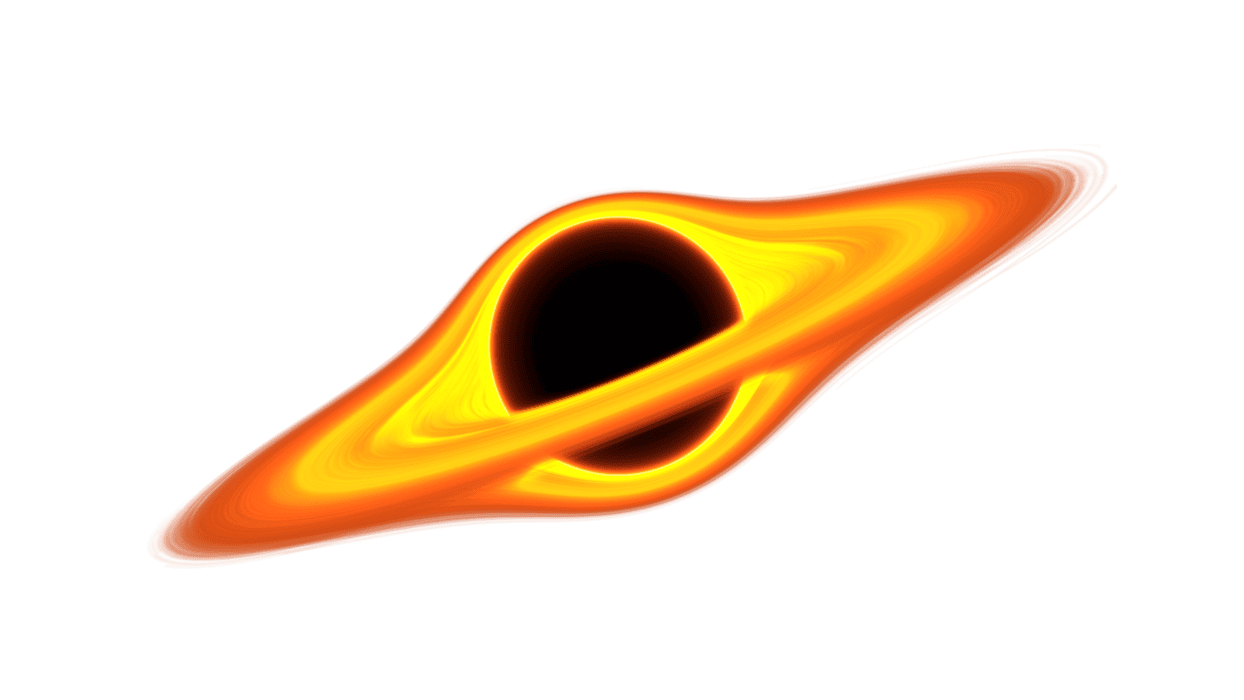
While the effects of time dilation are typically minuscule in everyday human experience, they become significant at extreme speeds or in powerful gravitational fields, such as near black holes where time could theoretically slow to a crawl, or even stop completely from an outside observer’s perspective at the event horizon.
In conclusion, time dilation is much more than a theoretical curiosity; it’s a scientifically proven phenomenon that underscores the incredible elasticity of time itself. It’s a testament to the revolutionary power of Einstein’s theories and a constant reminder that our universe is far stranger and more fascinating than our everyday perceptions suggest. From keeping our GPS precise to extending the apparent life of subatomic particles, time dilation is an essential, easy-to-grasp insight into the very fabric of existence.
0 Comments