How do the incandescent giants that light up our universe come into being? The birth of a star is not just a scientific phenomenon; it’s a cosmic ballet orchestrated by gravity, gas, and dust, leading to the ignition of a celestial furnace. From vast, cold clouds to shimmering beacons of light, the journey from interstellar matter to a fully fledged star is one of the most fundamental and awe-inspiring processes in the cosmos, a story of amazing origins gradually uncovered by astronomers.
The Cosmic Womb: Stellar Nurseries
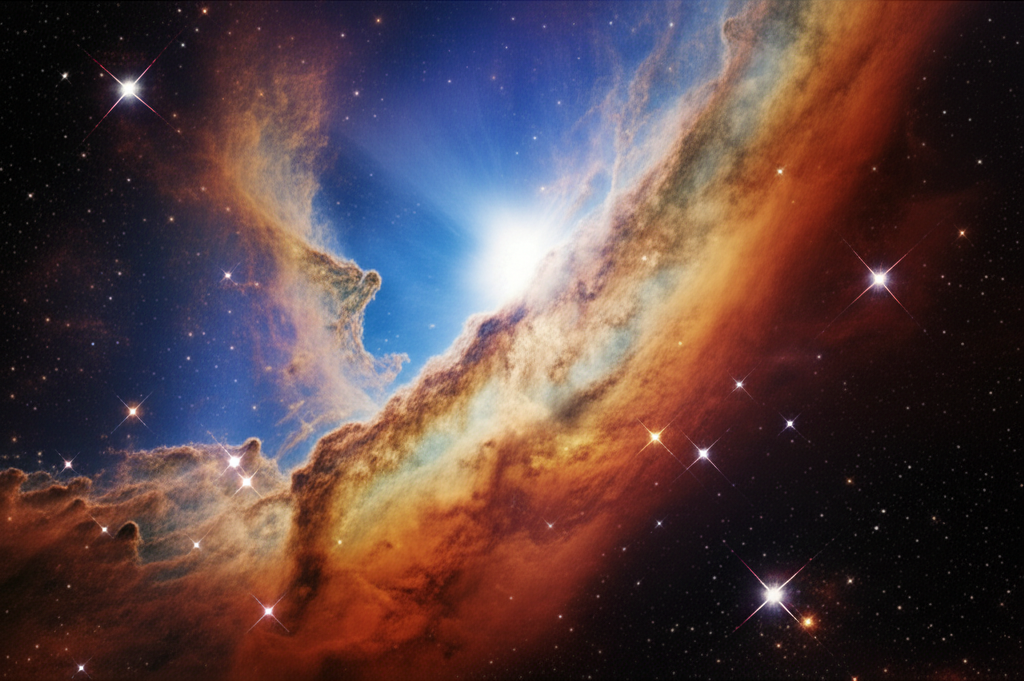
The incredible journey of a star begins in the most unlikely of places: vast, dark, cold clouds of gas and dust known as nebulae. These immense interstellar clouds, often spanning light-years across, are primarily composed of hydrogen (about 75%) and helium (about 25%), with trace amounts of heavier elements and microscopic dust grains. While some nebulae glow brightly, energized by nearby stars, the specific types that serve as star nurseries are often dense, dark molecular clouds, effectively shielding their internal processes from our view. These regions are cold, with temperatures barely above absolute zero, allowing atoms and molecules to clump together.
Within these molecular clouds, gravity constantly tugs at every atom. However, for most of the cloud’s life, the internal gas pressure and turbulent motions due to electromagnetic forces prevent a complete collapse. So, what triggers the dramatic event that leads to star formation?
The Genesis of Collapse: Gravity’s First Act
The initial trigger for star birth can be subtle or violent. Often, an external shockwave is the catalyst. This might come from a nearby supernova explosion, whose expanding bubble of gas violently compresses parts of the molecular cloud. Alternatively, the gravitational pull of passing spiral arms in a galaxy, or even collisions between molecular clouds, can create denser regions.
Once a sufficiently dense pocket within a molecular cloud exists, gravity begins to win the tug-of-war against internal pressure. This dense pocket, often referred to as a “core” or “clump,” starts to collapse in on itself, drawing in surrounding gas and dust. As the material falls inward, the gravitational potential energy is converted into kinetic energy, and then into thermal energy, causing the core to slowly heat up. This early, contracting stage is a crucial precursor to the birth of a star.
From Cloud to Core: The Protostar Emerges
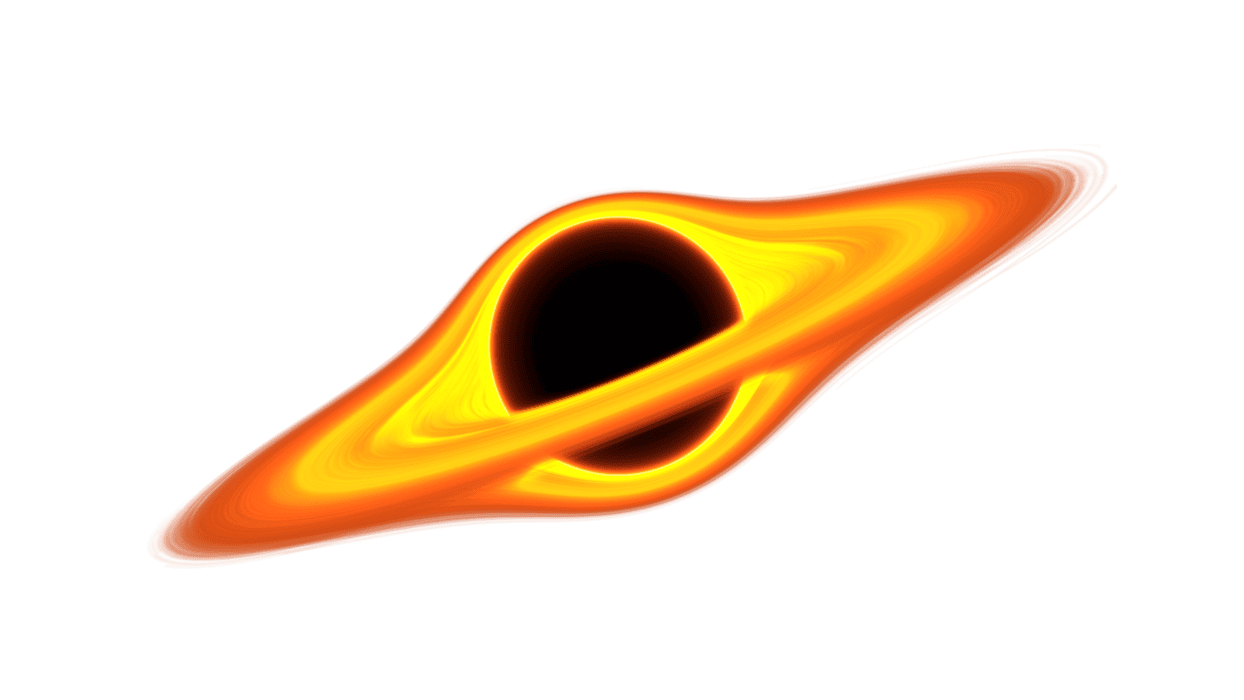
As the collapse continues, the core becomes denser and hotter. The collapsing material isn’t uniform; it tends to flatten into a rotating disk, known as a protostellar disk or accretion disk, around the central, increasingly dense object. This disk is crucial because it funnels material onto the growing core, feeding the nascent star. The rotation of the disk also helps to shed angular momentum, which would otherwise prevent the core from collapsing further.
At this stage, the central object is known as a protostar. It’s not yet a true star because its core isn’t hot enough to initiate nuclear fusion. However, it’s glowing brightly due to the intense heat generated by gravitational contraction. These protostars are often shrouded in thick dust, making them difficult to observe directly with optical telescopes. Infrared telescopes, however, can pierce through the dust, revealing the energetic processes occurring within.
Furthermore, protostars often exhibit powerful bipolar outflows—jets of gas ejected from the poles of the protostar. These jets, sometimes kilometers per second fast, clear away some of the surrounding material, dispersing the natal gas and dust and helping to regulate the star’s growth. These outflows can create spectacular objects known as Herbig-Haro objects when they collide with surrounding interstellar gas.
How a Protostar Ignites: The Birth of a True Star
The protostellar phase can last for hundreds of thousands to millions of years, depending on the star’s eventual mass. Throughout this period, the protostar continues to contract, and its core temperature and pressure steadily increase. The immense gravitational forces squeeze the hydrogen atoms ever closer.
The critical moment arrives when the core temperature reaches an astounding 10 to 15 million degrees Celsius (18 to 27 million degrees Fahrenheit). At this extreme temperature and pressure, the nuclei of hydrogen atoms begin to fuse together, forming helium. This process, known as nuclear fusion, releases an enormous amount of energy, marking the true birth of a star.
When nuclear fusion begins in the core, the outward pressure generated by this energy production finally balances the inward pull of gravity. The star achieves a state of hydrostatic equilibrium, settling into a stable phase of its life. This is when the star officially joins the main sequence, where it will spend the vast majority of its existence, steadily burning hydrogen into helium in its core, shining brightly for billions of years. Our own Sun is a main-sequence star, about halfway through its hydrogen-burning phase.
Stellar Diversity: The Role of Mass
The mass of the collapsing cloud fragment dictates the final mass of the star, and this, in turn, determines almost everything else about its life.
Brown Dwarfs: If the core never gathers enough mass to reach the critical temperature for sustained hydrogen fusion (less than about 0.08 times the mass of the Sun), it becomes a “failed star” known as a brown dwarf, slowly cooling over eons.
Red Dwarfs: The smallest true stars, like red dwarfs, burn their fuel very slowly and can live for trillions of years.
Sun-like Stars: Stars similar to our Sun will live for billions of years.
Massive Stars: The most massive stars burn through their fuel incredibly quickly, living only for a few million years before ending their lives in spectacular supernova explosions, which then, in a beautiful cosmic cycle, can trigger the birth of new stars.
A Legacy of Creation
The unassisted journey from a diffuse cloud of gas and dust to a radiating star is a testament to the fundamental forces of the universe. Each glowing star in the night sky is a product of this intricate dance between gravity and fusion, a process that not only illuminates the cosmos but also enriches it. The nuclear fusion within stars creates the heavier elements—carbon, oxygen, iron, and beyond—that are essential building blocks for planets, and ultimately, for life itself. Understanding how stars are born reveals not just their origins, but the very genesis of everything around us, including ourselves.
0 Comments