How does the universe hold together? What invisible force keeps our feet on the ground, the Moon in orbit around Earth, and planets dancing around the Sun? For centuries, gravity remained a profound mystery, a fundamental force that simply was. Today, thanks to the insights of brilliant minds like Isaac Newton and Albert Einstein, we possess a stunning, simple truth about its mechanics — a truth that revolutionized our understanding of space, time, and the very fabric of existence.
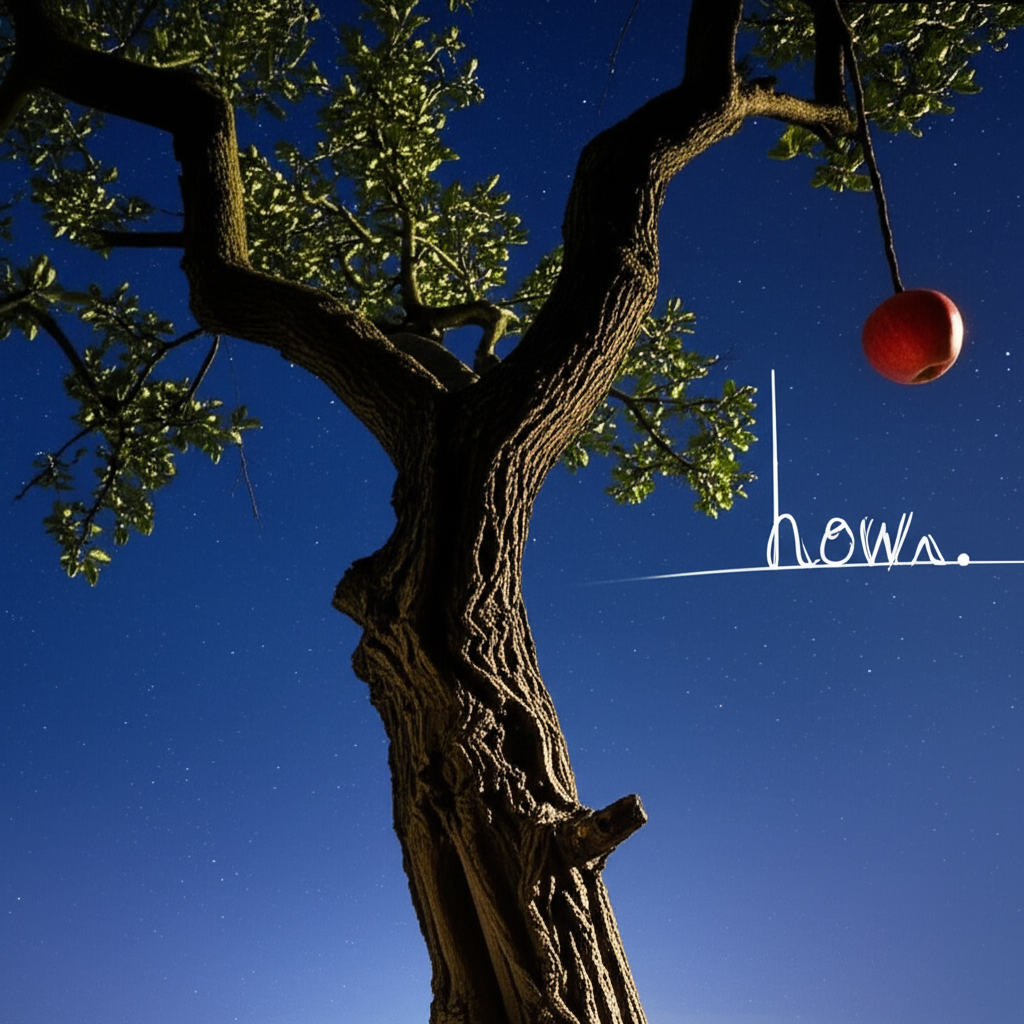
For much of human history, gravity was observed but not truly understood. Ancient civilizations recognized the consistent downward pull, and philosophers pondered its nature. It wasn’t until the 17th century that Sir Isaac Newton provided the first comprehensive mathematical description of gravity. His Law of Universal Gravitation, famously inspired (perhaps apocryphally) by a falling apple, posited that every particle of matter in the universe attracts every other particle with a force that is directly proportional to the product of their masses and inversely proportional to the square of the distance between their centers. Newton’s genius offered a powerful predictive tool. His equations allowed scientists to accurately calculate planetary orbits, predict cometary paths, and understand the tides. It was a monumental achievement, treating gravity as an instantaneous, invisible force acting across vast distances.
How Einstein Redefined Our Understanding of Gravity
While Newton’s model was incredibly successful, it left some questions unanswered. It couldn’t explain certain peculiarities in Mercury’s orbit, nor did it offer a mechanism for how this “action at a distance” actually worked. The true conceptual breakthrough arrived in the early 20th century with Albert Einstein’s General Theory of Relativity. Far from being merely a force, Einstein revealed gravity to be a manifestation of the curvature of spacetime itself.
Imagine spacetime as a gigantic, invisible trampoline or a stretched rubber sheet. If you place a small marble on it, it causes a tiny, almost imperceptible dip. But if you place a heavy bowling ball in the center, it creates a significant indentation. Now, if you roll another small marble near the bowling ball, it won’t travel in a straight line; instead, it will curve inwards, appearing to be “pulled” towards the bowling ball. In this analogy, the bowling ball represents a massive object like a planet or a star, and the marble represents a smaller object or even light.
According to Einstein, massive objects — like the Earth, Sun, or black holes — warp the fabric of spacetime around them. What we perceive as gravity is simply the motion of objects following the curves and “dips” created by these masses. The Earth doesn’t “pull” the Moon in the traditional sense; rather, the Moon is following the curved path in spacetime created by Earth’s mass, just as a marble follows the curve around a bowling ball. This elegant concept explained Newton’s observations and much more, including the precession of Mercury’s orbit and the bending of light around massive objects, which was famously confirmed during a solar eclipse in 1919.
The Consequences of Curved Spacetime
This revelation means gravity isn’t a force pulling on things, but rather a property of the arena in which things move. The curvature of spacetime has profound implications:
Orbits: Planets orbit the Sun not because the Sun exerts a direct pull, but because they are moving along the shortest possible paths (geodesics) through the spacetime curved by the Sun’s immense mass.
Time Dilation: Gravity even affects time. In regions of stronger gravity, time runs more slowly. This phenomenon, known as gravitational time dilation, is not just theoretical; it’s a measurable effect that must be accounted for in technologies like GPS satellites to maintain their accuracy.
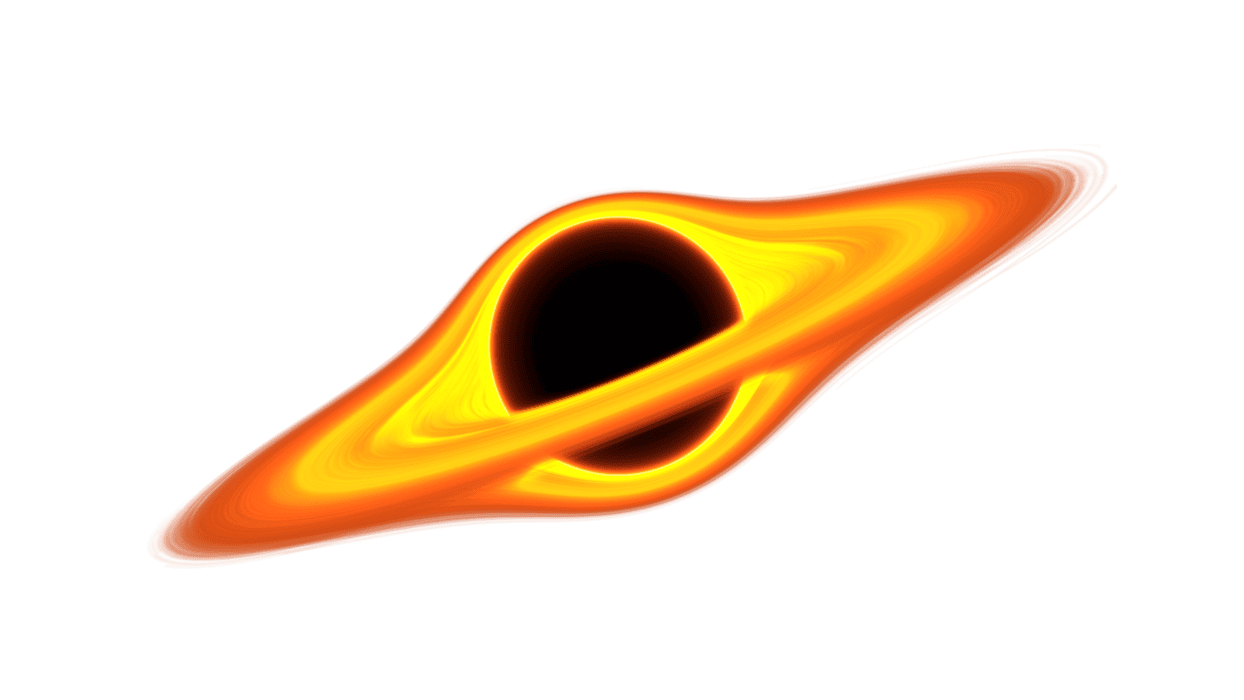
* Black Holes: When an object is incredibly dense, like a black hole, it warps spacetime so severely that nothing, not even light, can escape once it crosses a certain boundary called the event horizon.
How Does Gravity Fit with the Quantum World?
Despite the elegance and predictive power of General Relativity, there remains one major puzzle: unifying gravity with quantum mechanics. Quantum mechanics describes the universe at the smallest scales – the realm of particles and forces like electromagnetism, the strong nuclear force, and the weak nuclear force. While these three forces have been successfully integrated into the “Standard Model” of particle physics, gravity stands apart.
Physicists hypothesize the existence of a quantum particle called a “graviton” that would mediate the gravitational force, much like photons mediate the electromagnetic force. However, directly detecting gravitons or developing a consistent theory of quantum gravity has proven incredibly challenging. Theories like String Theory and Loop Quantum Gravity are ambitious attempts to bridge this gap, proposing that fundamental particles are not point-like but rather tiny, vibrating strings, or that spacetime itself has a discrete, granular structure at the Planck scale. The quest to reconcile these two pillars of modern physics is one of the grandest challenges in science today, promising an even deeper understanding of “how” the universe truly operates.
Gravity in Our Everyday Lives
While often discussed in the context of planets and black holes, gravity is omnipresent and deeply integrated into our daily existence. It’s the reason we don’t float off into space, why objects fall when dropped, and how water flows downhill. Our very sense of balance and weight is fundamentally linked to gravity. Architects calculate for it, engineers design around it, and pilots anticipate its effects. From the simple act of pouring a glass of water to the complex trajectories of space missions, gravity is the constant, invisible conductor of our world.
The stunning, simple truth of gravity, therefore, isn’t just about a force; it’s about the very geometry of the cosmos. It’s the realization that space and time are not merely a static backdrop but dynamic participants, shaped by matter and energy, and in turn, dictating their motion. From Newton’s apple to Einstein’s curved spacetime, our understanding of gravity has evolved immensely, yet the universe continues to offer new mysteries, urging us to keep asking “how.” The journey to fully unravel its secrets is far from over, promising even more astounding revelations about the fabric of reality.
0 Comments