
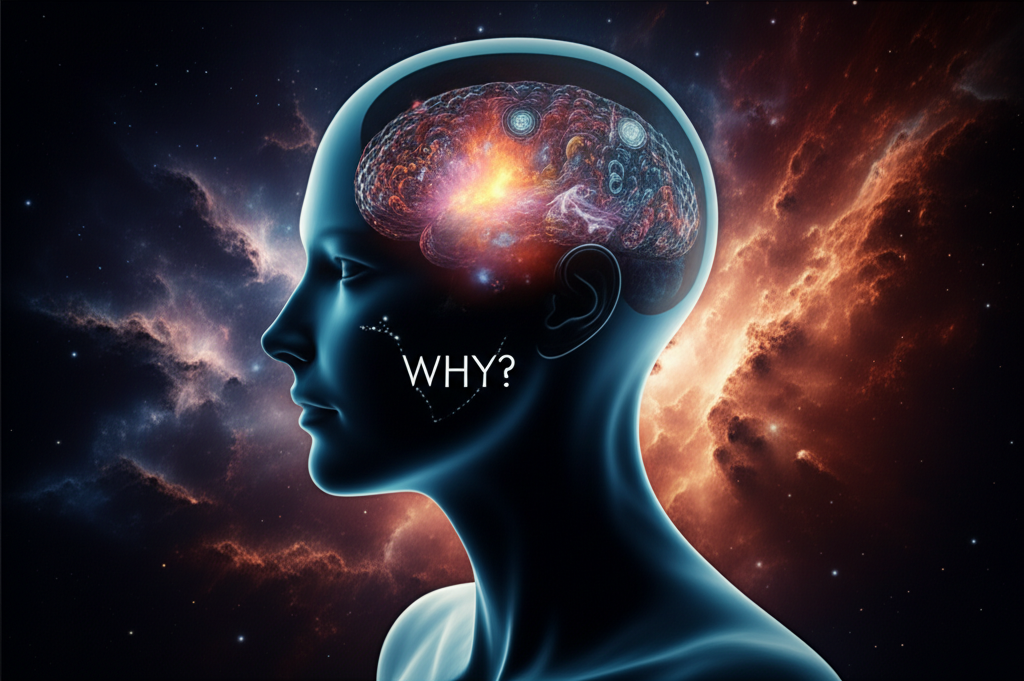
Why do humans dream? This question has captivated philosophers, scientists, and everyday ponderers for millennia, sparking endless theories about the mysterious nightly journeys our minds undertake. From vivid adventures to unsettling nightmares, dreams are a universal human experience, yet their purpose remains one of psychology’s most intriguing puzzles. While no single theory completely unlocks the enigma, a fascinating array of scientific, psychological, and even evolutionary perspectives offer compelling insights into why we drift into these nocturnal narratives.
Early Musings and Psychoanalytic Depths
Historically, dreams were often seen as divine messages, prophecies, or windows into other realms. Ancient civilizations carefully interpreted omens and guidance gleaned from their sleep. With the advent of modern psychology, figures like Sigmund Freud introduced groundbreaking, albeit controversial, interpretations. Freud’s psychoanalytic theory posited that dreams are the “royal road to the unconscious,” serving as a disguised fulfillment of repressed wishes and desires. He believed that the bizarre imagery often found in dreams was a symbolic language, protecting the dreamer from confronting uncomfortable truths while simultaneously allowing repressed thoughts to surface.
Carl Jung, another towering figure in psychoanalytic thought, expanded on this, proposing that dreams tap into a “collective unconscious” – a universal storehouse of human experience, archetypes, and symbols shared across cultures. For Jung, dreams were not just about personal repression but also about integrating parts of the self, seeking balance, and guiding individuals toward psychological wholeness, a process he called individuation.
Modern Science Weighs In: The Brain’s Night Shift
While Freud and Jung laid significant groundwork, contemporary science has largely shifted its focus to the physiological processes underlying dreaming, particularly during Rapid Eye Movement (REM) sleep.
One of the most prominent modern theories is the Activation-Synthesis Theory, proposed by J. Allan Hobson and Robert McCarley. This theory suggests that dreams are essentially the brain’s attempt to make sense of random neural firings originating in the brainstem during REM sleep. The brain, particularly the frontal cortex, then synthesizes these chaotic signals into a coherent, albeit often strange, narrative. While initially suggesting dreams might be largely meaningless byproducts, later refinements by Hobson acknowledge that the brain’s attempt to impose meaning can still reflect a search for coherence and connections.
Why We Dream: Processing Information and Consolidating Memories
Beyond random firings, many scientists believe dreams play a crucial role in cognitive functions, particularly memory and learning. During sleep, and especially REM, new memories are transferred from short-term to long-term storage. Dreams, in this context, might be the byproduct of the brain actively sifting through daily experiences, consolidating important information, and discarding irrelevant details.
Imagine your brain as a busy office, and dreams are the sound of the filing cabinets being reorganized overnight. Studies have shown that people who get adequate REM sleep perform better on memory tasks. Dreams might also act as a sort of “mental rehearsal,” where the brain runs simulations of social interactions, tasks, or challenges encountered during the day, strengthening neural pathways and preparing for future scenarios.
Emotional Regulation and Creative Outlets
Another compelling hypothesis suggests that dreams serve a vital function in emotional regulation. By re-experiencing stressful or traumatic events in the safe, detached environment of a dream, the brain can process and defuse their emotional charge. This “sleep-on-it” phenomenon often leads to a more balanced perspective upon waking. Dreams can be a pressure-release valve, allowing us to safely confront fears, anxieties, and unresolved conflicts without real-world consequences.
Furthermore, dreams are often a wellspring of creativity. The unrestrained, non-linear thinking characteristic of dreams can lead to novel solutions to problems, inspire artistic endeavors, and spark new ideas. Famous examples abound, from the chemist August Kekulé discovering the structure of the benzene ring after dreaming of a snake biting its tail, to Paul McCartney hearing the melody for “Yesterday” in a dream. Dreams tap into a flexible, associative mode of thought that is less constrained by waking logic, fostering genuine innovation.
The Evolutionary ‘Why’: Threat Simulation and Adaptation
From an evolutionary standpoint, some theories propose that dreams serve an adaptive purpose, enhancing our survival. The Threat Simulation Theory, championed by Antti Revonsuo, suggests that dreams, particularly nightmares, function as a virtual reality simulator for threatening situations. By repeatedly encountering dangerous scenarios in our dreams, like being chased or falling, our brains practice fight-or-flight responses, thus honing our threat perception and evasive actions in a safe, simulated environment. This “practice” could give us an edge when facing real-world dangers.
Other evolutionary perspectives also suggest dreams may help maintain brain activity during long periods of rest, prevent sensory deprivation, or even facilitate critical self-assessment and social bonding by processing complex relational dynamics.
Unlocking Your Own Dream World
While the specific biological and psychological mechanisms behind dreams continue to be explored, the prevailing view is that they serve multiple, overlapping functions rather than a single purpose. They are a complex interplay of memory consolidation, emotional processing, creative exploration, and even evolutionary adaptation.
To better understand your own unique dream landscape, consider keeping a dream journal. Recording your dreams immediately upon waking can reveal recurring symbols, themes, and emotional patterns that offer a personalized window into your subconscious. Paying attention to your dreams is not just about deciphering hidden meanings; it’s about engaging with a profound and intrinsic part of being human – a nightly journey into the boundless potential of the mind. As science continues to unravel the intricacies of sleep and consciousness, our understanding of why we dream will undoubtedly continue to evolve, one amazing truth at a time.
0 Comments