
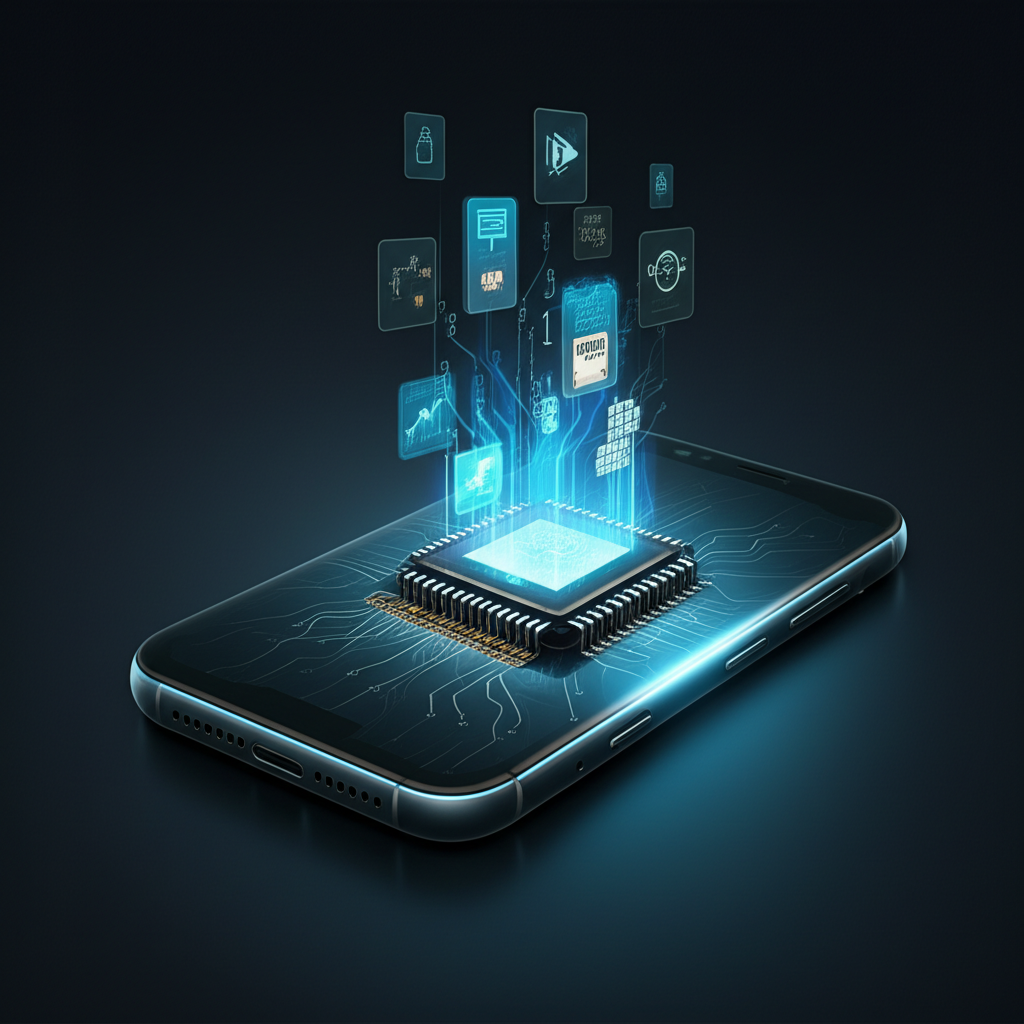
How do the slim, sleek devices in our pockets manage to perform such an astonishing array of complex tasks, from snapping high-resolution photos and streaming 4K videos to running elaborate games and facilitating instant global communication? The intricate dance of data processing within a modern smartphone is a marvel of miniaturization and engineering, a silent symphony orchestrated billions of times every second. Understanding the journey of data from a simple touch to a displayed result reveals not just cutting-edge technology, but also profound insights into how digital information truly comes to life.
At the heart of every smartphone’s capabilities lies a highly integrated system designed to capture, interpret, manipulate, and present vast amounts of information. This process is far more sophisticated than merely running apps; it involves a continuous interaction between specialized hardware components, advanced software algorithms, and a constant flow of electrical signals.
The Brain and Its Specialized Divisions: System-on-a-Chip (SoC)
The central nervous system of your smartphone is its System-on-a-Chip, or SoC. This isn’t just a single processor; it’s an entire ecosystem of processing units, memory controllers, and communication interfaces all integrated onto a single silicon die. This design is crucial for both performance and power efficiency in a compact form factor.
Key components within an SoC typically include:
Central Processing Unit (CPU): Often comprising multiple cores (e.g., octa-core), the CPU is the general-purpose workhorse. It handles the operating system, runs applications, manages tasks, and performs most of the logical and arithmetic operations required for everyday use. Modern CPUs employ a mix of “big” powerful cores for demanding tasks and “little” energy-efficient cores for background processes, dynamically switching between them to balance performance and battery life.
Graphics Processing Unit (GPU): Responsible for rendering all visual elements, from the buttery-smooth animations of the user interface to the intricate 3D graphics of high-end games and video playback. GPUs contain hundreds or thousands of smaller cores optimized for parallel processing, allowing them to handle the massive mathematical calculations required for displaying rich visual content rapidly.
Digital Signal Processor (DSP): A specialized processor designed for specific, repetitive mathematical tasks, particularly those involving real-time signals like audio, video, and sensory data. DSPs are highly efficient at filtering noise, compressing/decompressing media, and performing Fourier transforms, making them ideal for tasks like voice recognition, camera image processing, and audio enhancement.
Neural Processing Unit (NPU) / AI Accelerator: Increasingly common in modern SoCs, NPUs are dedicated to machine learning and artificial intelligence tasks. They excel at pattern recognition, facial detection, natural language processing, and advanced computational photography, offloading these complex AI workloads from the CPU and GPU to improve speed and efficiency.
Image Signal Processor (ISP): While sometimes considered part of the DSP or NPU, the ISP is critical for smartphone cameras. It takes raw data from the image sensor and performs a multitude of operations in real-time – noise reduction, color correction, sharpening, dynamic range adjustments – before an image is saved or displayed.
Understanding How Data Flows: From Tap to Transmit
The process of data handling in a smartphone begins with input and culminates in some form of output. Let’s trace a typical interaction:
1. Input & Digitization: When you touch your screen, speak into the microphone, or take a picture with the camera, these physical actions are converted into electrical signals.
A touchscreen’s capacitive grid detects the change in electrical field and translates it into X-Y coordinates.
A microphone converts sound waves into analog electrical signals.
A camera’s image sensor captures light and converts photons into electrical charges.
These analog signals are then passed through Analog-to-Digital Converters (ADCs), which sample the signal at a high rate and translate them into digital form (a series of 0s and 1s) that the SoC can understand.
2. Immediate Processing & Prioritization: Once digitized, this raw data is immediately routed to the most appropriate processing unit within the SoC.
Touch input might go to the CPU for interpreting gestures or opening apps.
Camera data flows to the ISP for initial cleanup and then to the DSP/NPU for advanced processing (e.g., portrait mode, scene recognition).
Audio data goes directly to the DSP for compression or real-time voice recognition.
3. Memory Management: RAM, ROM, and Storage: Data isn’t just processed; it’s constantly moved and stored.
RAM (Random Access Memory): High-speed, volatile memory (e.g., LPDDR5) where the CPU and other components temporarily store data that is actively being used. Running apps, open files, and system processes reside here. The more RAM, the more apps and data your phone can juggle simultaneously without slowing down.
ROM (Read-Only Memory): Contains essential boot-up instructions and firmware that cannot be easily altered.
NAND Flash Storage: This is your phone’s long-term internal storage (e.g., UFS 3.1/4.0), where the operating system, applications, photos, videos, and other user data permanently reside. When you open an app, its code and necessary assets are copied from storage into RAM for faster access by the CPU.
4. Network Communication: When you send a message, upload a photo, or browse the web, data needs to be transmitted wirelessly.
A dedicated modem (often integrated into the SoC) handles cellular communication (5G, LTE).
Other radios manage Wi-Fi, Bluetooth, and NFC, converting processed digital data into radio waves for transmission and vice-versa.
5. Output & Presentation: Finally, the processed digital data is converted back into a perceivable format.
For visuals, the GPU renders frames, and the data is sent to the display’s controller, which then illuminates the pixels.
For audio, a Digital-to-Analog Converter (DAC) transforms the digital audio data back into analog electrical signals, which are then amplified and sent to the speakers or headphones.
* Haptic feedback (vibrations) is triggered by a small motor based on digital commands.
The Unseen Hand of Software: Orchestrating the Hardware Symphony
While hardware provides the raw power, it’s the software that brings it all to life. The operating system (Android or iOS) acts as the grand conductor, managing resources, scheduling tasks, handling security, and providing an interface between applications and the underlying hardware. App developers write code that leverages these operating system services and directly instructs the hardware controllers, ensuring that each tap, swipe, and command is translated into a series of intricate processing steps. Device drivers act as a bridge, allowing the OS to communicate with specific hardware components.
The Constant Pursuit of Efficiency
Given the limited battery life and compact form factor, efficiency is paramount. Every design choice, from the architecture of the SoC to the algorithms used in software, is aimed at performing tasks with minimal power consumption and heat generation. Techniques like heterogeneous computing (using the right processor for the right task), voltage scaling, clock gating, and advanced thermal management are continuously refined to squeeze maximum performance from minimal energy.
In conclusion, the modern smartphone is an unparalleled feat of engineering, packing immense computational power into a pocket-sized form. The “how” of its data processing involves a complex, multi-layered system where specialized processors, high-speed memory, and intelligent software collaborate seamlessly. The seemingly instantaneous responses we experience are the result of billions of calculations and data transfers, all orchestrated in milliseconds, offering genuinely stunning insights into the intricate ballet of information that powers our digital lives.
0 Comments