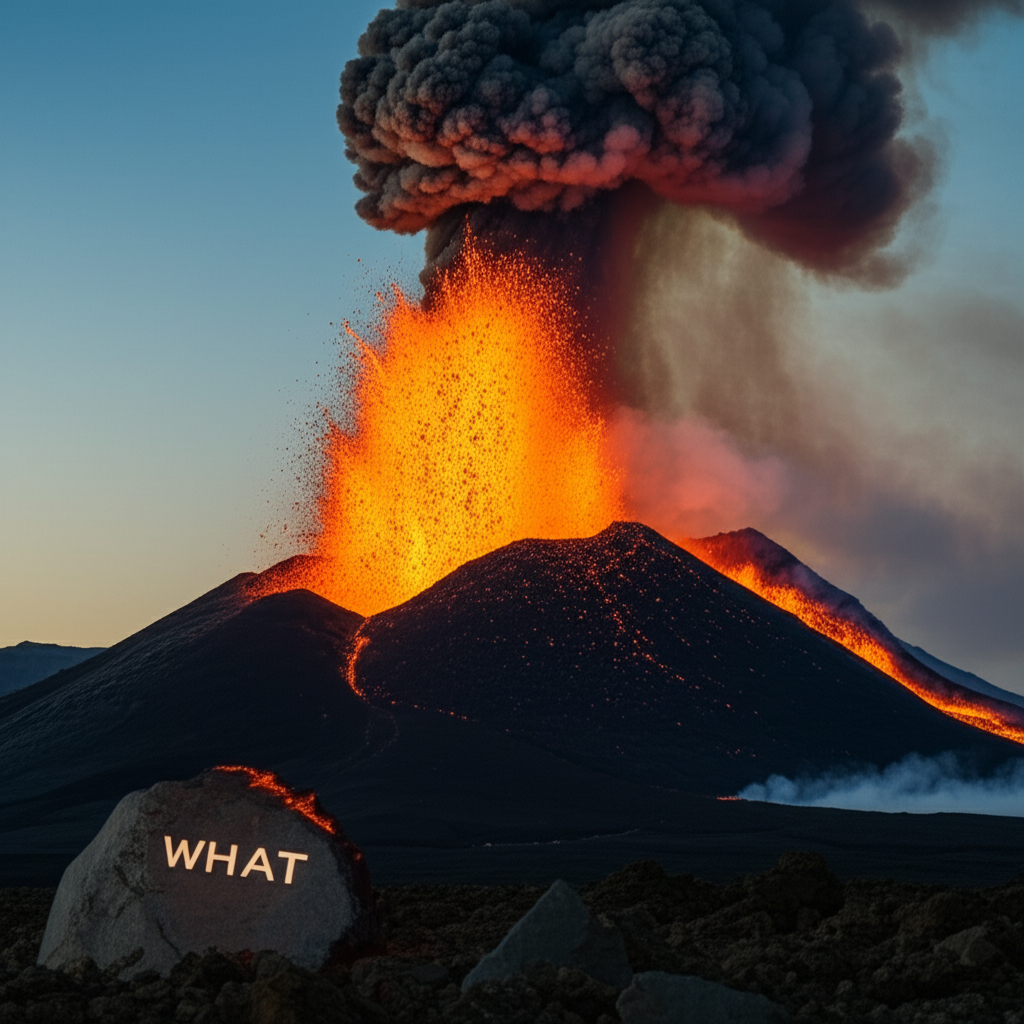
What lies beneath the Earth’s surface, capable of both geological creation and cataclysmic destruction? Volcanoes, these majestic yet terrifying natural phenomena, have captivated human societies for millennia, inspiring myths, shaping landscapes, and reminding us of our planet’s immense power. Understanding their origins and the inherent dangers they present is not merely an academic exercise; it’s crucial for preparedness, safety, and a deeper appreciation of our dynamic world. This article delves into the fundamental causes of volcanic activity and outlines the critical hazards associated with these fiery giants.
The Earth’s Fiery Engine: What Drives Volcanic Activity?
At its most fundamental level, volcanic activity is a direct consequence of the Earth’s internal heat and its dynamic outer shell, the lithosphere. Our planet isn’t a solid, static ball; it’s a vibrant, ever-changing system where immense heat from the core drives convection currents in the mantle. These currents, in turn, cause the large tectonic plates that make up the Earth’s surface to move, collide, and separate.
Plate Tectonics: The Primary Driver
The vast majority of volcanoes are found at the boundaries of these tectonic plates. There are three main types of plate interactions that lead to volcanism:
1. Divergent Plate Boundaries: Here, plates pull apart from each other. As they separate, magma (molten rock) from the mantle rises to fill the gap, creating new oceanic crust. This process, often occurring at mid-ocean ridges, results in effusive (non-explosive) underwater eruptions that build vast mountain ranges like the Mid-Atlantic Ridge. Iceland, a country straddling this ridge, is a prime example of divergent plate boundary volcanism found above sea level.
2. Convergent Plate Boundaries (Subduction Zones): These are where plates collide, and one plate (typically oceanic) slides beneath another (often continental or another oceanic plate) into the mantle. As the descending plate dives deeper, it heats up, and the water trapped within its minerals is released. This water lowers the melting point of the surrounding mantle rock, generating magma. This magma, being less dense than the solid rock around it, rises to the surface, forming explosive volcanoes. The “Ring of Fire” around the Pacific Ocean, home to over 75% of the world’s active volcanoes, is dominated by subduction zone volcanism, giving rise to iconic stratovolcanoes like Mount Fuji and Mount St. Helens.
3. Hot Spots: Not all volcanoes occur at plate boundaries. Hot spots are stationary plumes of exceptionally hot mantle material that rise through the Earth’s crust, melting the rock above them to form magma. As the tectonic plate moves over this fixed plume, it creates a chain of volcanoes, with the active one being directly over the hot spot. The Hawaiian Islands are a classic example, where successive islands formed as the Pacific Plate moved northwest over the Hawaiian hot spot.
Regardless of the specific tectonic setting, the overarching cause is the generation of magma deep within the Earth and its subsequent ascent to the surface through cracks and conduits in the crust. Once it breaks through, it’s no longer magma but lava, and the event is termed a volcanic eruption.
Must-Know Dangers: What Are the Core Dangers of Volcanic Eruptions?
While the majestic beauty of a volcano is undeniable, its power carries with it a formidable array of hazards that can devastate landscapes and endanger lives, both near the vent and thousands of miles away. Understanding these dangers is paramount for communities living in volcanic regions.
1. Lava Flows:
Description: Streams of molten rock that pour from a volcanic vent.
Danger: Though relatively slow-moving (rarely exceeding walking pace), lava flows are incredibly hot (700°C to 1,200°C) and completely destructive to everything in their path – homes, infrastructure, and vegetation are incinerated and buried. While typically not a direct threat to human life due to their speed, they pose a significant threat to property and livelihoods.
2. Pyroclastic Flows:
Description: The most dangerous of all volcanic hazards, these are fast-moving currents of superheated gas, ash, and volcanic debris (tephra) that rush down the flanks of a volcano.
Danger: Traveling at speeds of up to several hundred kilometers per hour and reaching temperatures of 200°C to 700°C, pyroclastic flows incinerate, suffocate, and completely entomb everything in their path. There is virtually no escape for those caught in their direct path.
3. Ashfall:
Description: Fine particles of pulverized rock and glass expelled into the atmosphere during an eruption, which then fall back to Earth.
Danger: Heavy ashfall can cause roofs to collapse under its weight, contaminate water supplies, disrupt critical infrastructure (power, communications), and devastate agriculture. Aviation is particularly vulnerable, as volcanic ash can cause jet engine failure. Inhaling fine ash can also cause severe respiratory problems.
4. Lahars (Volcanic Mudflows):
Description: Fast-moving slurries of volcanic ash, rock debris, and water (from rainfall, melting snow/ice, or crater lakes).
Danger: Lahars can travel tens of kilometers down river valleys, gaining speed and destructive power, engulfing everything in their path. They are often triggered hours or even days after an eruption ends and can be incredibly destructive even when the volcano is not actively erupting.
5. Volcanic Gases:
Description: Volcanoes release a cocktail of gases, including water vapor, carbon dioxide (CO2), sulfur dioxide (SO2), hydrogen sulfide (H2S), and hydrogen fluoride (HF).
Danger: While some dissipate quickly, heavier gases like CO2 can accumulate in low-lying areas, displacing oxygen and causing suffocation. SO2 can cause acid rain and contribute to respiratory issues. HF can contaminate water and food sources, leading to a crippling bone disease in animals.
6. Volcanic Tsunami:
Description: Large ocean waves generated by submarine eruptions, massive landslides into the ocean caused by flank collapse, or explosive coastal eruptions.
Danger: Similar to earthquake-generated tsunamis, these waves can travel across entire ocean basins, causing catastrophic flooding and destruction upon reaching shorelines.
7. Climate Change (Long-term Impact):
Description: Extremely large, explosive eruptions can inject vast quantities of ash and sulfur aerosols high into the stratosphere.
Danger: These particles can block sunlight, leading to a temporary global cooling effect. While not an immediate danger to individuals, historical eruptions like that of Mount Pinatubo in 1991 demonstrated a measurable drop in global temperatures for several years after the event, impacting weather patterns and agriculture worldwide.
Monitoring and Mitigation
Given the profound dangers posed by volcanoes, scientific monitoring is critical. Volcanologists use a range of tools—seismometers to detect earthquakes, GPS and tiltmeters to measure ground deformation, gas sensors to monitor emissions, and satellite imagery—to track changes and predict potential eruptions. Early warning systems and well-drilled evacuation plans are essential in saving lives, though the unpredictable nature of volcanic activity always presents a challenge.
In conclusion, volcanoes are powerful manifestations of our planet’s internal heat and dynamic processes. While they have shaped the Earth’s surface and contributed to its fertility, the dangers they unleash are diverse and formidable. A deep understanding of volcanic causes and hazards is not just academic; it’s a vital component of living safely and respectfully in the shadow of these awe-inspiring geological forces.
0 Comments