
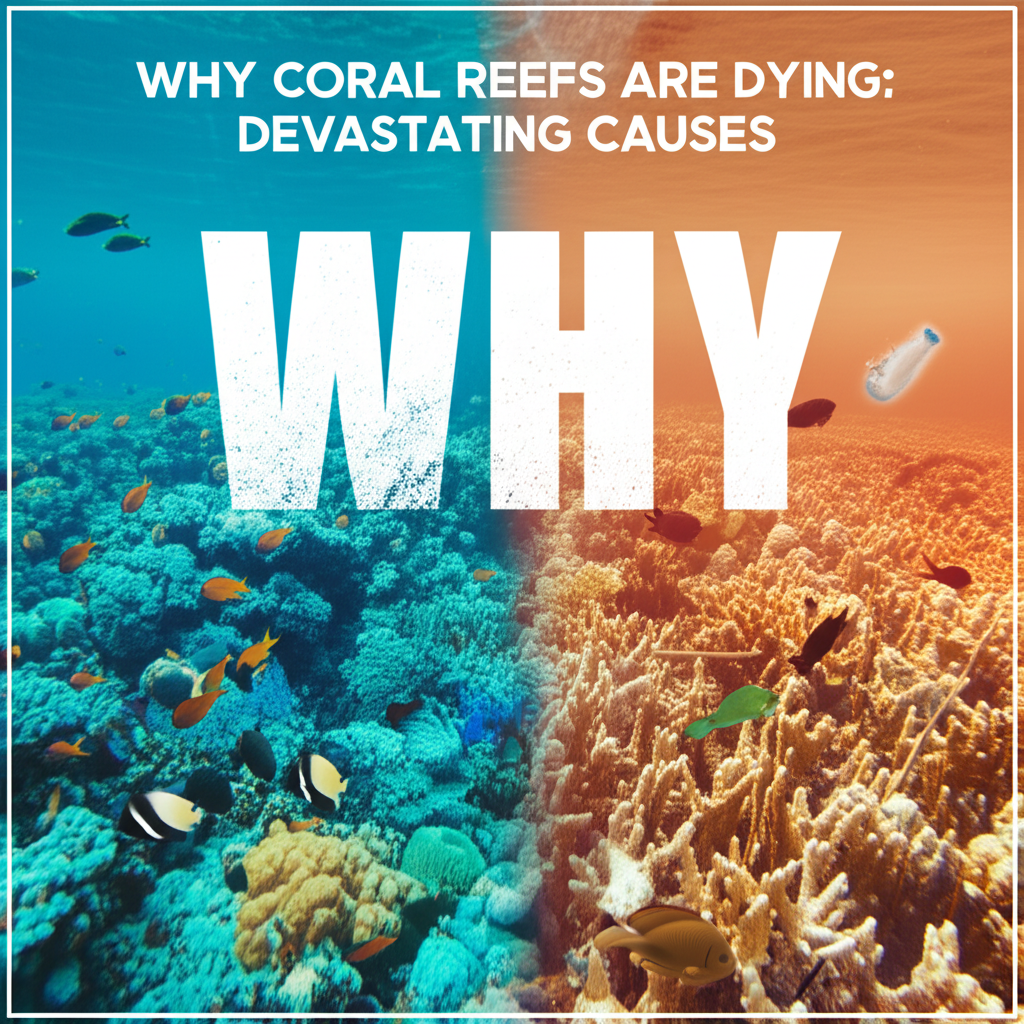
The Silent Tides: Unraveling the Causes Behind the Global Decline of Coral Reefs
Why are the world’s vibrant coral reefs, once teeming with life and colour, rapidly fading into ghost-like structures? These breathtaking underwater cities, crucial to marine biodiversity and coastal protection, are facing an unprecedented global crisis. Their decline is not attributable to a single factor but rather a complex and often interconnected web of environmental stressors, predominantly driven by human activities. Understanding the devastating causes behind their demise is the first critical step toward safeguarding these invaluable ecosystems for future generations.
Why Climate Change is the Overarching Threat
At the forefront of coral reef destruction is human-induced climate change. The burning of fossil fuels releases vast amounts of carbon dioxide into the atmosphere, leading to two primary impacts on our oceans:
1. Ocean Warming and Coral Bleaching: As global temperatures rise, so does the temperature of the oceans. Corals have a symbiotic relationship with microscopic algae called zooxanthellae, which live within their tissues and provide them with food through photosynthesis, giving corals their vibrant colours. When water temperatures become too high, corals expel these algae, turning white – a phenomenon known as coral bleaching. While corals can recover from mild bleaching events, prolonged or severe bleaching deprives them of their primary food source, leading to starvation and eventual death. The frequency and intensity of mass bleaching events have increased dramatically in recent decades, pushing reefs beyond their capacity for recovery.
2. Ocean Acidification: The oceans absorb a significant portion of atmospheric carbon dioxide, which then reacts with seawater to form carbonic acid. This process, known as ocean acidification, reduces the availability of carbonate ions, essential building blocks that corals (and many other marine organisms) need to construct their calcium carbonate skeletons. As the water becomes more acidic, it becomes harder for corals to grow and repair themselves, making them weaker and more vulnerable to other stressors.
These two interconnected impacts of climate change represent an existential threat to coral reefs worldwide, weakening their resilience and making them more susceptible to other localized pressures.
Human Handprints: Localized Pressures and Their Impact
Beyond the global threat of climate change, numerous localized human activities directly contribute to the degradation of coral reefs:
Pollution’s Deadly Embrace: Runoff from agricultural lands, urban areas, and industrial sites introduces a cocktail of pollutants into coastal waters. Excess nutrients from fertilizers promote the growth of algae, which can smother corals by blocking sunlight and competing for space. Sedimentation from construction, deforestation, and dredging can likewise settle on corals, suffocating them and reducing light penetration. Chemical pollutants, including pesticides, industrial waste, and even certain sunscreens, can directly poison corals and disrupt their biological processes.
Overfishing and Destructive Fishing Practices: The removal of key herbivorous fish species (like parrotfish and surgeonfish) through overfishing can lead to an unchecked growth of algae, outcompeting and smothering corals. Destructive fishing methods, such as dynamite fishing, cyanide fishing, and bottom trawling, cause direct physical damage to coral structures, shattering them in an instant and destroying critical habitats.
Coastal Development and Habitat Destruction: Rapid coastal development, including the construction of ports, resorts, and artificial islands, often involves dredging, land reclamation, and the direct destruction of reef habitats. These activities can also increase sedimentation, alter water flow, and introduce pollutants from construction materials and increased human presence.
Unsustainable Tourism: While tourism can be a powerful advocate for conservation, unsustainable practices can harm reefs. Anchors dropped onto reefs, careless divers or snorkelers touching and breaking corals, and the accumulation of trash can cause significant damage. Furthermore, some chemical sunscreens contain ingredients harmful to coral reproduction and growth, contributing to their stress.
Natural Contributions: A Smaller but Present Factor
While human-induced threats are overwhelmingly dominant, natural phenomena also play a role in coral reef dynamics, though typically healthy reefs can recover from them. These include:
Coral Diseases: Outbreaks of coral diseases, often exacerbated by environmental stress from warming waters and pollution, can rapidly spread and decimate coral colonies.
Predator Outbreaks: Natural predators like the Crown-of-Thorns starfish (Acanthaster planci) can experience population explosions, leading to widespread predation on corals. These outbreaks can sometimes be linked to imbalances caused by overfishing their natural predators or nutrient runoff.
* Severe Storms: Hurricanes and cyclones can cause physical damage to corals, breaking off branches and overturning colonies. However, healthy, resilient reefs are typically better equipped to recover from such natural disturbances than those already weakened by human stressors.
Why Interconnection Matters: A Vicious Cycle
The critical takeaway is that these threats are rarely isolated. Instead, they often interact, creating a vicious cycle that accelerates reef degradation. Ocean warming makes corals more susceptible to disease, while pollution and overfishing reduce their ability to recover from bleaching events. A reef already weakened by climate change and pollution becomes inherently less resilient to an ordinary storm or a natural predator outbreak.
In conclusion, the devastating causes behind the dying coral reefs are multifaceted, primarily stemming from global climate change and a range of destructive local human activities. Recognizing the urgency and the interconnected nature of these threats is paramount. Protecting these irreplaceable underwater ecosystems demands a concerted global effort to mitigate climate change alongside robust local conservation strategies to reduce pollution, manage fisheries sustainably, and promote responsible coastal development. The fate of these vital marine powerhouses, and the countless species they support, now rests firmly in our hands.
0 Comments