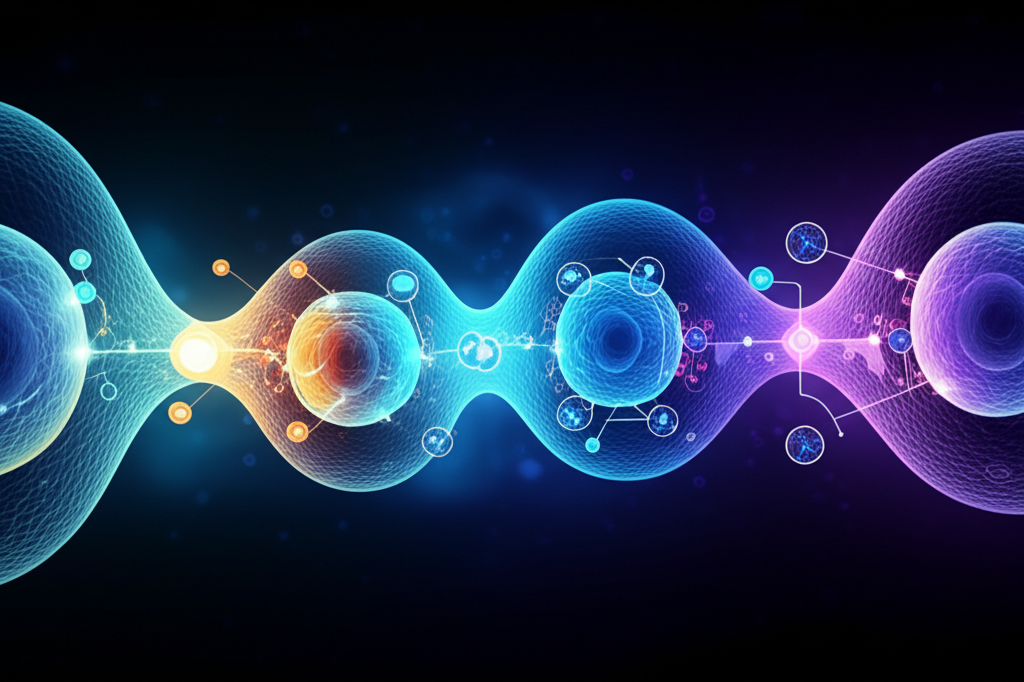
How do the trillions of cells within our bodies work together in perfect harmony? From the beating of a heart to the complex thoughts forming in our brains, every single biological process, every interaction, and every function hinges on an intricate, invisible conversation happening constantly between cells. This cellular communication is the fundamental language of life, dictating development, sustaining health, and orchestrating responses to the environment. Unlocking the secrets of how cells talk to each other reveals the astonishing sophistication of biology and offers profound insights into health, disease, and the very essence of existence.
Why Cellular Dialogue is Indispensable
Imagine a bustling city where no one could communicate – no traffic signals, no phone calls, no written messages. Chaos would ensue. Our bodies are infinitely more complex than any city, and without constant, precise communication, they would quickly devolve into dysfunction. Cellular communication is crucial for:
Development: From a single fertilized egg, specific cellular signals guide the formation of tissues, organs, and entire organisms, ensuring cells differentiate into their correct roles at the right time.
Homeostasis: Maintaining a stable internal environment (temperature, pH, glucose levels) is vital for survival. Cells continuously exchange signals to regulate these parameters.
Immune Response: When pathogens invade, immune cells must communicate rapidly and effectively to identify the threat, mount a defense, and eliminate the invaders.
Tissue Repair and Regeneration: After injury, cells coordinate to repair damaged tissue, ensuring proper wound healing and regeneration.
Neural Function: Neurons communicate through electrical and chemical signals, forming the basis of thought, emotion, memory, and movement.
When these communication pathways go awry, the consequences can be devastating, leading to conditions like cancer, diabetes, autoimmune disorders, and neurodegenerative diseases.
The Language of Life: Signaling Molecules and Receptors
At its core, cellular communication involves a sender cell releasing a signal and a receiver cell detecting and responding to that signal. The “words” of this cellular language are chemical messengers, also known as ligands. These can be incredibly diverse:
Hormones: Long-distance messengers, like insulin or adrenaline, traveling through the bloodstream.
Neurotransmitters: Short-distance messengers released by nerve cells, like dopamine or serotonin.
Growth Factors: Proteins that stimulate cell growth, proliferation, and differentiation.
Cytokines: Small proteins crucial for immune responses and inflammation.
Gases: Simple gases like nitric oxide can also act as signaling molecules.
For a cell to “hear” a message, it must possess specific receptors – proteins, usually embedded in the cell membrane or located within the cytoplasm, that bind to these ligands. This binding is highly specific, often described as a “lock and key” mechanism: only the correct key (ligand) can unlock the specific lock (receptor).
How Cells Send and Receive Messages
Cells employ several sophisticated strategies to transmit information, categorized by the distance the signal travels:
1. Direct Contact (Juxtacrine Signaling): The most intimate form of communication, involving direct physical contact between adjacent cells.
Gap Junctions (animals) and Plasmodesmata (plants): These are tiny channels that physically connect the cytoplasm of neighboring cells, allowing small molecules and ions to pass directly between them. This is vital for synchronized cell activity, like heart muscle contraction.
Cell-Cell Recognition: Membrane-bound proteins on one cell surface can bind to receptors on an adjacent cell, directly transmitting signals. This is critical in immune responses, where immune cells recognize and interact with foreign cells or infected host cells.
2. Local Signaling: Messages are sent over short distances to nearby cells.
Paracrine Signaling: A signaling cell releases ligands into the extracellular fluid, affecting target cells in the immediate vicinity. For example, growth factors promoting wound healing often use paracrine signaling.
Synaptic Signaling: A specialized form of paracrine signaling unique to the nervous system. A neuron releases neurotransmitters into a tiny gap called a synapse, which quickly diffuse across to a target neuron or muscle cell.
3. Long-Distance Signaling (Endocrine Signaling): Messages are dispatched across the entire organism.
Hormonal Signaling: Endocrine cells release hormones into the bloodstream, where they travel to distant target cells throughout the body. Only cells with the specific receptors for that hormone will respond. For example, the pancreas releases insulin, which travels to muscle and liver cells to regulate blood sugar.
4. Autocrine Signaling: A cell releases a signal that then binds to receptors on its own surface, affecting its own behavior. This is often used to reinforce a particular cellular state, but it can also be exploited by cancer cells to promote their own uncontrolled growth.
Signal Transduction: From Message to Action
Once a ligand binds to its receptor, the message isn’t just “received;” it’s translated into actionable changes within the cell. This process, known as signal transduction, is often compared to a molecular relay race.
1. Reception: The ligand binds to the receptor, causing a conformational change (shape change) in the receptor. This initial binding is the actual reception of the signal.
2. Transduction: The activated receptor initiates a cascade of events inside the cell. Often, this involves a series of molecules, primarily proteins, that are activated in turn. This might involve:
Phosphorylation Cascades: Many signaling pathways involve protein kinases, enzymes that add phosphate groups to other proteins, thereby activating or deactivating them. These cascades can amplify the original signal significantly, allowing a small number of ligand-receptor bindings to evoke a large cellular response.
Second Messengers: Small, non-protein molecules like cyclic AMP (cAMP) or calcium ions (Ca2+) often act as intermediate signaling molecules, rapidly diffusing throughout the cytoplasm to relay and amplify the signal.
3. Response: The final activated molecules in the transduction pathway trigger a specific cellular response. This response can take many forms:
Gene Expression: Activation or repression of specific genes, leading to the synthesis of new proteins.
Metabolic Changes: Alterations in enzyme activity, changing the cell’s metabolism.
Cell Growth and Division: Initiating or halting cell proliferation.
Apoptosis: Programmed cell death, crucial for development and removing damaged cells.
Changes in Cell Shape or Movement: Affecting the cytoskeleton.
The elegance of signal transduction lies in its ability to be highly specific, yet also incredibly adaptable. Different cells can respond differently to the same signal due to variations in their internal signaling components, allowing for immense biological complexity and fine-tuning.
The Future of Understanding Cellular Conversations
The more we understand how cells communicate, the more effectively we can address a myriad of diseases. Faulty signaling pathways are at the heart of many illnesses. For example, in cancer, cells might ignore signals to stop dividing or succumb to programmed cell death. In diabetes, cells might fail to respond correctly to insulin.
Research into cellular communication pathways is leading to the development of new drugs that target specific receptors or signaling molecules, aiming to restore proper cellular dialogue. From designing more effective immunotherapies to developing precision medicines for genetic disorders, deciphering the vital secrets of cellular communication is a frontier brimming with potential. It reminds us that at the most fundamental level, life is a continuous, dynamic conversation – a symphony of signals that orchestrates every moment of our existence.
0 Comments