How do we even begin to grasp a concept as mind-bending as infinity? It’s a term we toss around casually, describing things that seem endless, like the vastness of space or a never-ending to-do list. Yet, true infinity is far more profound and complex than just “really, really big.” It’s a concept that transcends simple quantification, posing deep philosophical questions and challenging the very limits of human understanding. Far from being a singular, monolithic entity, infinity manifests in various forms, some so immense they make others seem tiny by comparison – a paradox that has fascinated mathematicians, physicists, and philosophers for centuries.
What Exactly Is Infinity?
At its core, infinity is not a number in the conventional sense, but rather a concept representing something without any bound or end. You can’t reach it by counting, nor can you point to a specific “size” and declare it to be infinity. Instead, it describes processes, sets, or quantities that are endless. Think of the natural numbers: 1, 2, 3, and so on. No matter how high you count, there will always be another number. This endless sequence is an example of an infinite set.
For centuries, mathematicians primarily acknowledged infinity in a potential sense – something that could always be continued, but never truly completed or fully contained. It was Georg Cantor in the late 19th century who revolutionized our understanding by demonstrating the existence of “actual” infinities and, even more astonishingly, revealing that there isn’t just one type of infinity, but an entire hierarchy of them.
How Can Some Infinities Be Bigger Than Others?
This might sound like a trick question or a logical impossibility. If something is infinite, surely it’s as big as it can get? Cantor proved otherwise by introducing the idea of “cardinality,” which is a way to measure the “size” of a set, finite or infinite. He proposed that two sets have the same cardinality if their elements can be put into a one-to-one correspondence, meaning you can pair each element of one set with a unique element of the other, with no elements left over in either set.
Let’s look at the two most fundamental “sizes” of infinity that Cantor identified:
1. Countable Infinity ($aleph_0$, Aleph-null):
This is the “smallest” type of infinity, exemplified by the set of natural numbers (1, 2, 3, …). A set is countably infinite if its elements can be put into a one-to-one correspondence with the set of natural numbers. This means you could, theoretically, list them out one by one, even if that list would never end.
Surprisingly, many sets we might intuitively consider “larger” than the natural numbers are also countably infinite:
The Integers: (… -2, -1, 0, 1, 2 …) – Despite including negative numbers and zero, they can still be paired with natural numbers (e.g., 0 with 1, 1 with 2, -1 with 3, 2 with 4, -2 with 5, and so on).
The Rational Numbers: (all numbers that can be expressed as a fraction, like 1/2, -3/4, 5/1). – This feels much denser, as there are infinitely many rational numbers between any two others. Yet, Cantor devised a brilliant method (often visualized as spiraling through a grid of fractions) to demonstrate that even these can be put into a one-to-one correspondence with the natural numbers.
2. Uncountable Infinity ($c$ or $2^{aleph_0}$, the Continuum):
This is where things get truly mind-bending. Cantor’s greatest triumph was proving that some infinite sets are fundamentally larger than the set of natural numbers; they cannot be counted, even theoretically. The most famous example is the set of real numbers, which includes all rational numbers and all irrational numbers (like π or $sqrt{2}$).
To prove this, Cantor used his famous diagonal argument. Imagine attempting to list all real numbers between 0 and 1 as infinite decimals. He showed that no matter how you try to construct such a list, you can always create a new real number between 0 and 1 that is not on your list, by constructing it diagonally. This means your list, no matter how long, can never encompass all real numbers.
The cardinality of the real numbers is known as the “continuum” because they form a continuous line without gaps. This uncountable infinity is truly vaster than countable infinities. The number of points on a single centimeter of a line segment is the same as the number of points on an infinitely long line – both are $c$. And both contain far more points than there are natural numbers.
Infinity in the Cosmos and Beyond
While mathematics provides abstract definitions, the concept of infinity spills into our understanding of the universe. How does this boundless scale manifest in reality? Cosmologists grapple with whether the universe itself is infinite in spatial extent, or if it curve back on itself, like the surface of a sphere, making it finite yet unbounded. Current observations suggest the observable universe is vast but finite, though the entire universe could still be spatially infinite.
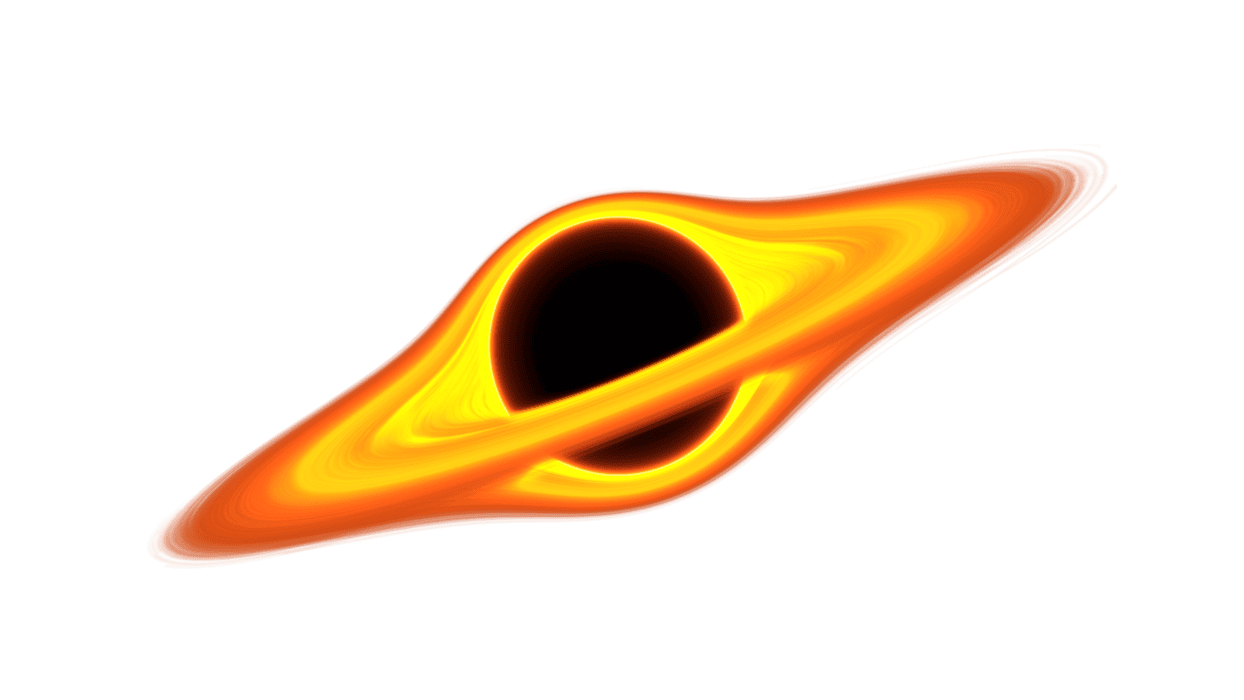
In physics, singularities inside black holes and at the Big Bang are mathematical points of infinite density and curvature, though physicists are still debating their physical reality. The wave functions in quantum mechanics often extend infinitely, representing the probability distribution of a particle throughout all space.
Even in everyday phenomena, we encounter traces of infinite concepts. Fractals, like the Mandelbrot set, exhibit infinite complexity at every zoom level. The geometry of a coastline, if measured with ever-smaller units, would appear to have an infinite length.
The Philosophical Weight of the Limitless
Beyond its scientific and mathematical implications, infinity holds profound philosophical weight. It challenges our intuitive grasp of causality, time, and existence. If the universe has always existed (an infinite past), how did anything begin? If space is truly infinite, does that mean every possibility, no matter how remote, must exist somewhere within it?
The concept of infinity humbles us, reminding us of the vastness of what we don’t know and perhaps can never fully comprehend. It forces us to confront the limitations of our finite minds trying to grapple with the boundless.
In conclusion, infinity is far more than just a large number; it’s a fundamental concept that underpins much of mathematics and our understanding of the cosmos. From the countable depths of whole numbers to the uncountably dense continuum of real numbers, and potentially to the edges of our universe, infinity presents a stunning and limitless scale that continues to expand our minds. It’s a journey into the endless, a constant reminder that for every boundary we perceive, there is always something more beyond.
0 Comments