
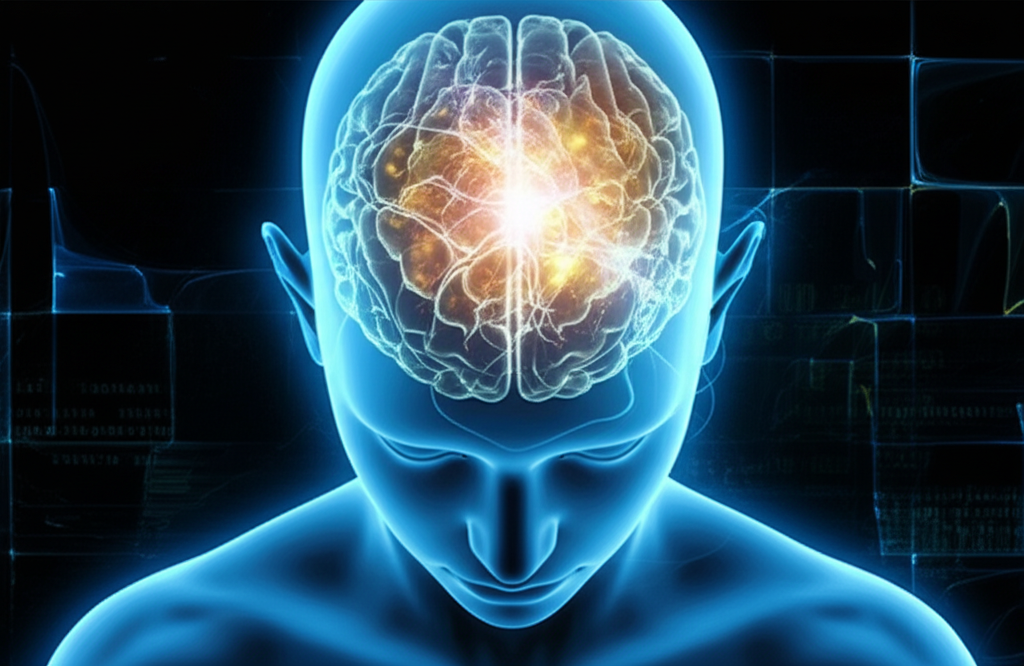
How Brains Create Thoughts: Uncover Amazing Secrets
How do the ephemeral sparks of thought ignite within the intricate labyrinth of our brains? For centuries, the inner workings of our minds remained one of humanity’s most profound mysteries. We intuitively know we think, reason, imagine, and feel, but the precise biological mechanisms underpinning these complex processes have only recently begun to yield their astonishing secrets. Far from being a simple switch, thought generation is a magnificent, orchestrated symphony involving billions of cells, electrical impulses, and chemical messengers, constantly interacting and evolving. Uncovering this amazing process means delving into the very essence of what makes us human.
The Neurological Symphony: The Basic Building Blocks of Cognition
At the fundamental level, thought is an emergent property of the brain’s primary cellular units: neurons. Our brains house an estimated 86 billion neurons, each a microscopic powerhouse capable of transmitting electrochemical signals. These neurons aren’t isolated; they connect with thousands of other neurons through specialized junctions called synapses. It’s across these microscopic gaps that communication happens, facilitated by neurotransmitters – chemical messengers like dopamine, serotonin, and acetylcholine.
When a neuron is sufficiently stimulated, it generates an electrical impulse, an “action potential,” which zips down its axon. Upon reaching the synapse, it triggers the release of neurotransmitters. These chemicals then diffuse across the synaptic cleft and bind to receptors on the neighboring neuron, either exciting it to fire its own signal or inhibiting it. This continuous dance of excitation and inhibition, firing and resting, forms the very language of the brain. The patterns and frequencies of these signals create the neural code that underpins all our mental activities, from the simplestreflex to the most profound contemplation.
From Sensory Input to Perception: How We Process the World
Our thoughts don’t spontaneously appear in a void; they are largely rooted in our interactions with the external world. The journey of thought often begins with sensory input. Every sight, sound, smell, taste, and touch is first converted into electrical signals by our sensory organs. Light hitting the retina becomes neural impulses sent to the visual cortex at the back of the brain. Sound vibrations reaching the inner ear translate into signals for the auditory cortex. These raw sensory data are not thoughts themselves, but they are the essential raw materials.
Once these sensory signals arrive at their respective primary processing areas, the brain doesn’t just register them; it interprets them. This interpretation is what we call perception. For example, your visual cortex doesn’t just see a collection of lines and colors; it constructs the image of a “chair” or a “tree.” This involves complex processing, pattern recognition, and comparison with stored memories. The brain fills in gaps, makes predictions, and filters out irrelevant information, all to create a coherent, meaningful representation of reality. The brain is not a passive recipient of information; it’s an active constructor of our reality, effectively shaping the initial frame for any subsequent thought processes.
The Orchestra of Thought: Neural Networks and Complex Processing
The real magic of thought generation lies in the intricate interplay of vast networks of neurons. While individual neurons are fundamental, it’s their collective action and the formation of complex neural pathways that give rise to conscious thought. Different brain regions specialize in different functions, but thought is rarely confined to a single area. Instead, it involves dynamic communication and integration across multiple regions.
For instance, understanding a sentence involves activity in language processing areas like Broca’s and Wernicke’s areas, but also relies on memory centers (hippocampus for recall), emotional centers (amygdala for connotation), and even visual areas if the sentence conjures an image. These distributed networks, often referred to as “connectomes,” are constantly forming, strengthening, and weakening based on experience and learning – a property known as neuroplasticity. When we learn something new or have a new experience, these networks reconfigure. A thought isn’t a static entity; it’s a dynamic pattern of activity across countless neurons, changing subtly with every new piece of information or insight.
The Role of Memory and Association in Thought Formation
Memory is inextricably linked to thought. Our brains constantly draw upon a vast repository of stored information, from factual knowledge to personal experiences and learned skills. When we encounter new information, the brain attempts to associate it with existing memories. If you see a new type of animal, your brain quickly accesses memories of similar animals to categorize it, predict its behavior, and form a concept – a thought – about it.
Working memory, a temporary mental workspace, allows us to hold and manipulate information actively for short periods, enabling complex reasoning and problem-solving. Long-term memory stores information for extended durations, forming the foundation of our knowledge base and personal identity. The strength of associations between different memories and concepts determines the fluidity and direction of our thoughts. This associative power is what allows for creativity, problem-solving, and abstract thinking, enabling us to connect seemingly unrelated ideas to form novel insights.
Unpacking Abstract Thought and Creativity
Perhaps one of the most astonishing aspects of the human brain is its capacity for abstract thought, imagination, and creativity. Unlike concrete thoughts tied directly to sensory input, abstract thoughts deal with concepts, ideas, and hypothetical scenarios. This ability largely stems from the advanced development of the prefrontal cortex, the brain’s executive control center. The prefrontal cortex orchestrates complex cognitive behaviors, decision-making, planning, and moderates social behavior.
When we engage in creative thinking, our brains often enter a state where different neural networks, usually segregated, show increased communication. This allows for unusual connections to be made, breaking free from conventional patterns. Imagination involves simulating sensory experiences or scenarios without actual external stimuli, essentially creating internal representations and manipulating them. This intricate interplay between memory, sensory processing, and executive functions allows us to invent new solutions, compose music, theorize about the universe, and ponder our own existence – truly the pinnacle of thought generation.
The Ongoing Quest: Unveiling More Secrets
While modern neuroscience has made incredible strides in understanding the biological underpinnings of thought, the journey is far from over. The “hard problem” of consciousness – understanding why these neural activities give rise to subjective experience – remains one of science’s most formidable challenges. However, through advanced imaging techniques, computational neuroscience, and collaborative research, we continue to peel back the layers of this extraordinary biological marvel.
The human brain is an unparalleled processor, a self-organizing masterpiece that constantly rewires itself based on experience, learning, and interaction. Every thought we generate, every emotion we feel, every memory we form, is a testament to the staggering complexity and elegance of this three-pound universe within our skulls. Understanding how brains create thoughts is not just a scientific endeavor; it’s a profound exploration into the very nature of who we are.
0 Comments