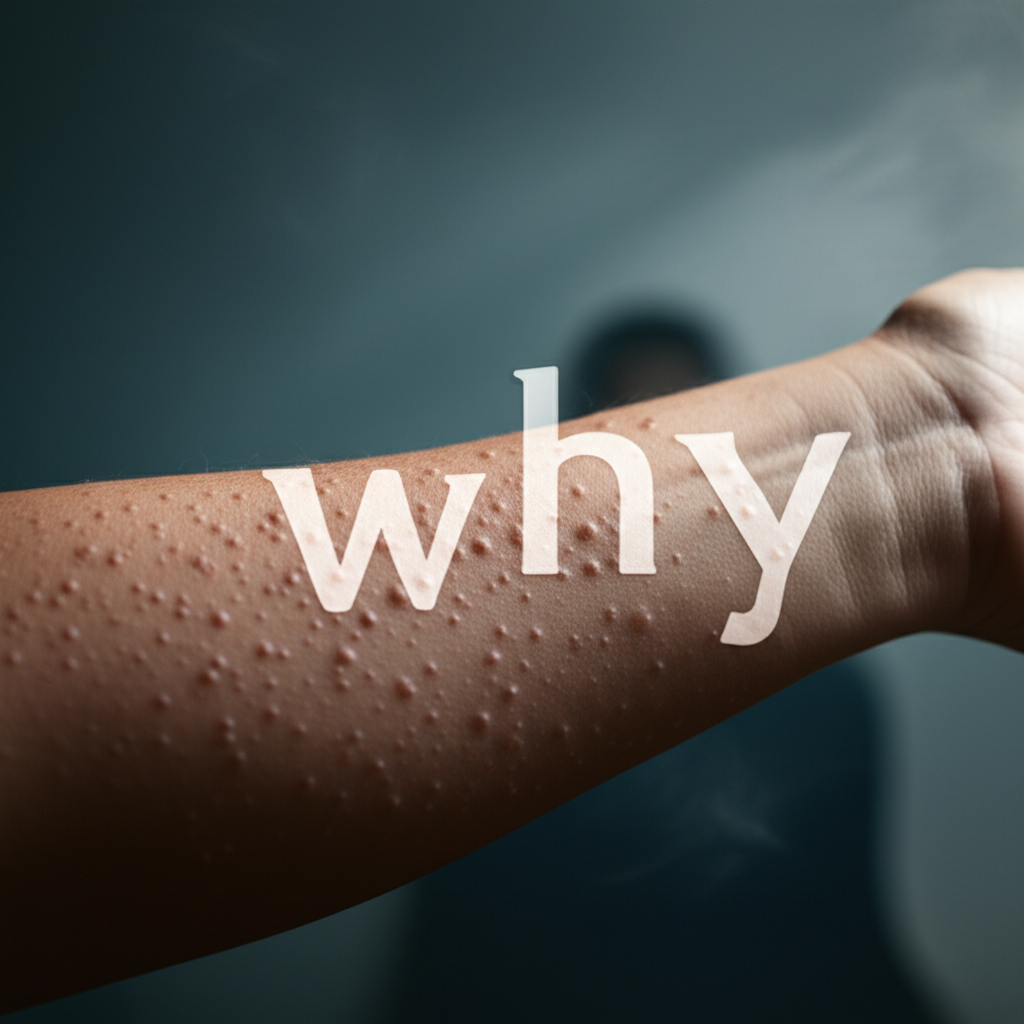
Why do our skin suddenly pucker, covered in tiny bumps with hairs standing rigidly on end? This peculiar, often involuntary reaction, known as goosebumps or piloerection, is a universal human phenomenon familiar to everyone. Whether it’s a sudden chill, a spine-tingling piece of music, or a frightful moment, goosebumps offer us a fascinating glimpse into our evolutionary past and the complex wiring of our brains. Far from being a mere quirk, these ephemeral bumps tell a story of survival, emotion, and our deep connection to the animal kingdom.
The Science Behind the Shivers
At a physiological level, the mechanism behind goosebumps is surprisingly simple yet profound. Each hair follicle on our skin is accompanied by a tiny muscle known as an arrector pili muscle. When this involuntary smooth muscle contracts, it pulls the hair follicle upright, causing the hair to stand on end. This action simultaneously creates the raised bumps on the skin’s surface that we recognize as goosebumps.
This reflex is controlled by the autonomic nervous system, specifically the sympathetic branch, which is responsible for our “fight or flight” responses. When triggered, the nervous system releases a surge of adrenaline (epinephrine), a hormone that signals these tiny muscles to contract. It’s a rapid, unconscious reaction, highlighting its ancient roots as a survival mechanism.
Why Do We Get Goosebumps? An Evolutionary Echo
To understand the core purpose of goosebumps, we need to look back millions of years to our furrier ancestors. For creatures covered in a thick coat, piloerection served two primary, vital functions:
1. Insulation: When exposed to cold, standing up the fur would trap a layer of air close to the body, acting as an insulating layer. This thicker barrier of air would help to reduce heat loss and keep the animal warm. While modern humans have significantly less body hair than our ancestors, the reflex persists, albeit with a greatly diminished practical effect.
2. Threat Display: In moments of fear or aggression, many animals — from a startled cat puffing up its tail to a porcupine raising its quills — use piloerection to appear larger and more intimidating to a potential predator or rival. This makes them seem like a more challenging target, a psychological tactic designed to deter confrontation. For our primate ancestors, a sudden bristling of hair might have served a similar warning purpose.
In this context, goosebumps become more than just a skin reaction; they are a direct link to the survival instincts honed over millennia, a physiological echo of a time when our hair was our shield and our warmth.
Beyond Survival: Modern Triggers and Emotional Resonance
While their original functions are largely vestigial in humans, goosebumps have evolved to respond to a wider array of stimuli, particularly emotional ones. This is where the phenomenon becomes truly intriguing.
Emotional Responses: Perhaps the most fascinating aspect of modern goosebumps is their strong link to our emotional landscape. Powerful pieces of music, moving works of art, inspiring speeches, the climax of a thrilling story, or even nostalgic memories can all trigger piloerection. These “aesthetic chills” or “frisson” are a testament to the intricate connection between our primitive physiological responses and our higher cognitive functions. The brain’s limbic system, particularly the amygdala (involved in processing emotions), plays a key role in orchestrating these reactions.
Fear and Awe: The “fight or flight” response is still very much active. A sudden scare, the suspense in a horror movie, or even moments of intense awe (like standing before a breathtaking natural wonder) can cause adrenaline to spike, leading to goosebumps. This is closer to the original “threat display” mechanism, albeit often without an actual physical threat.
* Cold: The original trigger remains – a sudden drop in temperature is still one of the most common reasons we experience goosebumps, even if the insulating effect is minimal with our current body hair.
The “Good” Goosebumps: Frisson and the Brain
The experience of “frisson” – those pleasant, shiver-inducing goosebumps triggered by music or other art forms – is particularly interesting. Research has shown that individuals who experience frisson more frequently often have a unique brain structure, with a greater volume of connections between the auditory cortex and the anterior insular cortex, which is involved in processing emotions. This suggests that their brains are wired to allow emotional and sensory information to flow more freely, leading to a more intense emotional and physical response.
This emotional piloerection is often associated with the release of dopamine, a neurotransmitter linked to pleasure and reward. The unexpected pleasure or emotional intensity triggered by a piece of music, for instance, can activate the brain’s reward system, leading to the physical manifestation of goosebumps. It’s a compelling example of how our ancient survival mechanisms have been repurposed to enhance our experience of beauty and deep emotion.
Why the Enduring Phenomenon Persists
So, why do we still get goosebumps if their practical utility for warmth or defense has largely disappeared? For one, evolutionary processes don’t always eliminate traits entirely once they become redundant. They might simply adapt or become vestigial. Yet, the persistence of goosebumps, particularly in their capacity to respond to complex emotions, suggests they are more than just an inconvenient leftover.
They serve as a fascinating biological bridge, connecting our rational, emotional selves to our most primitive instincts. They remind us that deep within our modern bodies lies an ancient creature, still capable of involuntary responses to the world around us. From the simple shiver of cold to the profound ripple of joy from a symphony, goosebumps are a humble yet eloquent testament to the ongoing dialogue between our evolutionary past and our rich, emotional present. They are a curious, strange phenomenon indeed, and one that makes us uniquely human.
0 Comments