
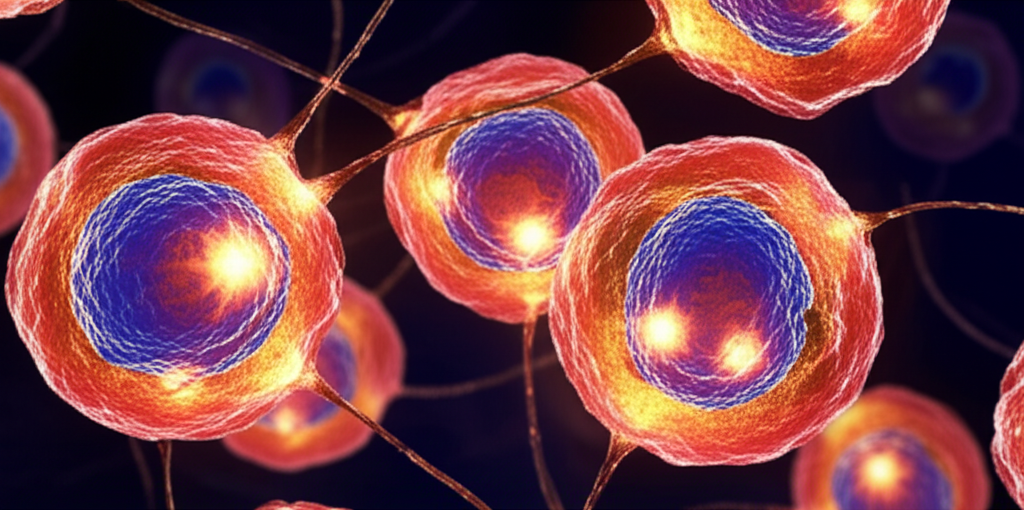
How cells communicate is one of the most fundamental and awe-inspiring processes in all of biology, a silent symphony playing out within every living organism. From the simplest single-celled bacteria coordinating their movements to the complex human body meticulously regulating every heartbeat and thought, cellular communication is the bedrock of life. It’s a sophisticated language, spoken through an intricate network of chemical signals and molecular interactions, enabling cells to coordinate, adapt, and respond to their environment. Understanding this intricate dialogue isn’t just academic; it unlocks vital secrets about health, disease, and the very mechanisms that sustain existence.
The Symphony of Life: Why Cells Talk
Imagine a bustling city or a perfectly synchronized orchestra. Neither could function without constant, precise communication between its individual components. The same holds true for living organisms. Cells, whether they are working in concert to form tissues and organs, or acting independently as part of a unicellular colony, must communicate to:
Coordinate growth and development: During embryogenesis, cells constantly exchange signals to differentiate into specialized types and arrange themselves into complex structures.
Respond to environmental changes: A cell might need to react to the presence of nutrients, toxins, or changes in temperature.
Maintain homeostasis: The body’s internal environment is kept stable through a continuous feedback loop of cellular signals.
Fight infection: Immune cells identify and eliminate pathogens through specific signaling pathways.
Repair damaged tissues: Cells at the site of injury communicate to initiate repair processes, including cell division and differentiation.
Without this constant chatter, cells would be isolated entities, unable to collectively build and maintain the complex organisms we see—and are.
The Language of Cells: Signaling Molecules
Just like humans use words, cells use specific molecules as their “words” or “messages.” These signaling molecules, often called ligands, are diverse and tailored to particular communication needs. They include:
Hormones: Chemical messengers produced in one part of the body (e.g., endocrine glands) and transported through the bloodstream to target cells far away. Insulin, adrenaline, and estrogen are prime examples.
Neurotransmitters: Specialized chemical signals released by neurons at synapses, rapidly transmitting information across tiny gaps to another neuron or a target cell (like a muscle cell). Acetylcholine and dopamine are well-known neurotransmitters.
Growth Factors: Proteins that stimulate cell growth, proliferation, and differentiation. They are crucial for development and tissue repair.
Cytokines: Small proteins involved in cell signaling, particularly important in the immune system to regulate immune responses and inflammation.
Gases: Even simple gases like nitric oxide (NO) can act as signaling molecules, often involved in processes like blood vessel dilation.
These diverse molecules are the lexicon of cellular communication, each carrying a specific instruction or piece of information.
How Cells Receive and Interpret Messages
For a message to be understood, there must be a receiver. Cells possess specialized receptor proteins that selectively bind to signaling molecules. This binding is highly specific, much like a lock and key, ensuring that only the correct message is received.
Receptors can be located in two main places:
Cell-surface receptors: These are embedded in the plasma membrane and bind to signaling molecules that cannot easily pass through the cell membrane (e.g., proteins, large polar molecules).
G-protein coupled receptors (GPCRs): A vast family of receptors involved in nearly every physiological process, from vision and smell to immune function. When a ligand binds, it activates an associated G-protein, leading to a cascade of internal signals.
Enzyme-linked receptors: These receptors often have an intracellular domain that functions as an enzyme or is closely associated with one. Receptor tyrosine kinases (RTKs), for instance, phosphorylate specific amino acids on target proteins, initiating signaling pathways.
Ion channel receptors: These receptors open or close an ion channel in response to ligand binding, directly altering the flow of ions into or out of the cell and rapidly changing the cell’s membrane potential.
Intracellular receptors: Located in the cytoplasm or nucleus, these receptors bind to small, hydrophobic signaling molecules (like steroid hormones) that can readily pass through the plasma membrane. Once bound, the receptor-ligand complex often acts as a transcription factor, directly influencing gene expression.
Once a signaling molecule binds to its receptor, the message is then “transduced.” Signal transduction is the process of converting an extracellular signal into an intracellular response. This often involves a series of molecular events, or a “signaling pathway,” where one molecule activates another, which activates another, and so on. This cascade can amplify the initial signal, distribute it to multiple targets, and modulate the cell’s response. Often, secondary messengers (like cyclic AMP, calcium ions, or IP3) are generated within the cell to relay and amplify the signal.
Modes of Communication: Different Channels
Cells employ various communication strategies depending on the distance and specificity required:
Direct Contact (Gap Junctions/Plasmodesmata): In animals, gap junctions are microscopic channels that directly connect the cytoplasm of adjacent cells, allowing small molecules and ions to pass through. Plant cells use similar structures called plasmodesmata. This is the most intimate form of communication, enabling rapid coordination.
Paracrine Signaling: Cells release local mediators that act on nearby target cells. This is a localized form of communication, often seen in growth factor signaling or inflammatory responses where signals need to persist for only a short time.
Synaptic Signaling: A specialized form of paracrine signaling unique to the nervous system. Neurons release neurotransmitters into a small gap (synapse) between themselves and a target cell, enabling very rapid and precise communication over short distances.
Endocrine Signaling: The classic example of long-distance communication. Endocrine cells release hormones into the bloodstream, which then travel throughout the body to reach distant target cells bearing the appropriate receptors.
Autocrine Signaling: A cell releases a signaling molecule that then binds to receptors on its own surface, effectively signaling to itself. This can be important in regulating growth and differentiation, but dysfunctional autocrine signaling can contribute to cancer.
The Impact of Miscommunication: Diseases and Disorders
Given the critical role of cellular communication, it’s no surprise that breakdowns in these pathways are at the heart of many diseases. When cells “misunderstand” or fail to send or receive messages correctly, the consequences can be severe:
Cancer: Often arises from faulty growth factor signaling, leading to uncontrolled cell proliferation and a failure to respond to signals that would normally trigger programmed cell death (apoptosis).
Diabetes: Type 1 diabetes involves the immune system attacking insulin-producing cells, while Type 2 diabetes involves impaired insulin signaling (cells becoming resistant to insulin’s message).
Neurodegenerative Diseases: Conditions like Alzheimer’s and Parkinson’s involve the impaired communication and eventual death of neurons, leading to cognitive and motor deficits.
Autoimmune Disorders: The immune system misidentifies harmless cells or tissues as foreign, leading to inappropriate signaling and attack on the body’s own healthy structures.
Understanding the intricacies of cellular communication is thus not merely a biological curiosity; it’s a vital frontier in medicine. By deciphering how cells orchestrate life’s processes, scientists can pinpoint the exact points of failure in disease and develop targeted therapies that restore proper cellular dialogue.
In conclusion, the hidden language of cells is an astonishing testament to nature’s complexity and elegance. Every breath, every thought, every healing wound is a product of this ceaseless, intricate exchange of information. Unlocking these vital secrets continues to be a cornerstone of biological research, promising profound insights into health, longevity, and the very essence of life itself.
0 Comments