
Unlocking the Secrets of Time Dilation: Your Easy Guide to a Mind-Bending Phenomenon
What is time? It seems like a simple question, but when you delve into the heart of modern physics, you discover that time is far more complex and fluid than our everyday experience suggests. It’s not a universal, fixed rhythm ticking away identically for everyone in the cosmos, but rather a dynamic dimension that can stretch and shrink. This astonishing concept is known as time dilation, a cornerstone of Albert Einstein’s theories of relativity, and it reveals a universe far more astonishing than most of us can imagine. While the idea might sound like something out of science fiction, it’s a very real, scientifically proven phenomenon with tangible effects on everything from particle physics to global navigation systems.
What is Time Dilation, Exactly?
At its core, time dilation means that time passes at different rates for different observers. Imagine two clocks, perfectly synchronized. If one of those clocks undergoes certain conditions (either moving at a very high speed or being in a very strong gravitational field), it will tick at a different rate compared to the stationary or less gravitationally affected clock. From the perspective of an outside observer, the “moving” or “gravitationally challenged” clock would appear to run slower. It’s not just the clock’s mechanism failing; it’s time itself that is literally slowing down for that frame of reference.
This mind-bending effect stems from Einstein’s groundbreaking realization that space and time are not separate entities, but rather interwoven into a single “fabric” called spacetime. Events that happen in space also unfold in time, and how you perceive space and time depends crucially on your motion and the gravitational fields around you.
The Two Flavors of Time Dilation
Time dilation manifests in two primary ways, each described by a different aspect of Einstein’s relativity:
1. Special Relativistic Time Dilation (Velocity-Based)
This type of time dilation is a consequence of Einstein’s Special Theory of Relativity, which deals with observers in uniform motion relative to one another. The principle here is simple: the faster an object moves relative to an observer, the slower time passes for that object as seen by the stationary observer.
To grasp this, consider the constancy of the speed of light. Light always travels at the same speed (approximately 299,792,458 meters per second or about 186,000 miles per second) for all observers, regardless of their own motion. Imagine a “light clock” – two mirrors separated by a fixed distance, with a photon bouncing back and forth between them. Each bounce up and down counts as one “tick.”
If you were holding this light clock, the photon would travel a straight up-and-down path. But if you’re watching someone else carry this light clock past you at very high speed, you’d see the photon travel a diagonal path (like the hypotenuse of a right-angle triangle) because the mirrors themselves are moving horizontally. Since the speed of light is constant, the photon has to cover a greater distance in your frame of reference. To maintain constant speed over a longer distance, it must take longer to complete one “tick.” Thus, time itself is observed to pass more slowly for the moving clock.
A famous real-world example of this is the behavior of subatomic particles called muons. Muons are produced high in Earth’s atmosphere and have a very short lifespan. If time didn’t dilate, very few would survive long enough to reach the Earth’s surface. However, because they travel at speeds close to the speed of light, their “internal clock” slows down relative to ours, extending their effective lifespan and allowing many of them to reach detectors on the ground.
2. General Relativistic Time Dilation (Gravity-Based)
The second form of time dilation comes from Einstein’s General Theory of Relativity, which describes gravity not as a force, but as a curvature in the fabric of spacetime caused by mass and energy. The more massive an object, the greater the curvature it creates, and the stronger the gravitational field.
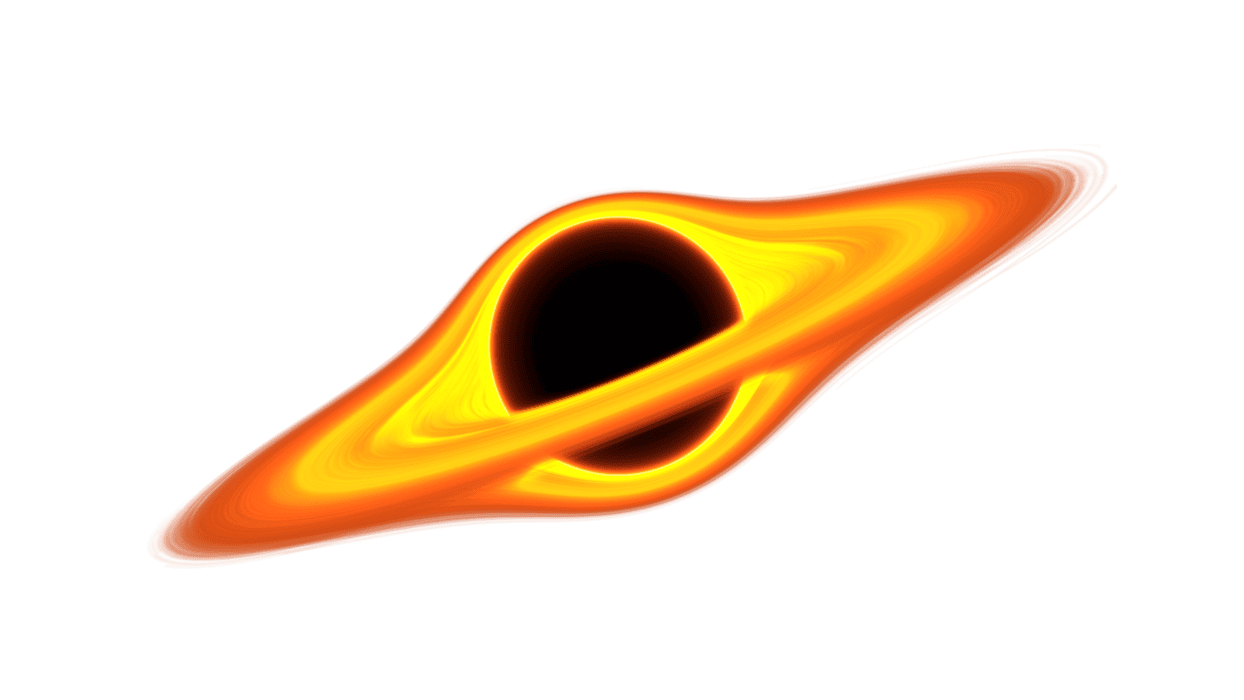
General relativistic time dilation dictates that clocks tick slower in stronger gravitational fields. If you were near a massive object like a black hole or even Earth, time would pass slightly slower for you than for someone further away in weaker gravity. Think of it this way: gravity directly affects the passage of time. The deeper you are in a “gravity well,” the slower time progresses.
This effect, while subtle on Earth, is measurable. A clock at the top of a skyscraper runs ever so slightly faster than a clock at the bottom, because the top clock is marginally further away from Earth’s center of mass and thus experiences a slightly weaker gravitational pull.
Is Time Dilation Just a Theory, or Does it Actually Happen?
Time dilation is not merely a theoretical curiosity; it’s a proven fact of the universe backed by extensive experimental evidence and practical application.
GPS Systems: Your Global Positioning System (GPS) relies critically on understanding time dilation. GPS satellites orbit Earth at high speeds (experiencing special relativistic time dilation) and also operate in a weaker gravitational field than clocks on Earth’s surface (experiencing general relativistic time dilation). Without correcting for both effects, GPS systems would accumulate errors of many kilometers per day, making accurate navigation impossible. The clocks on GPS satellites run about 38 microseconds faster per day than clocks on Earth due to these relativistic effects.
Atomic Clocks and Experiments: Experiments like the Hafele-Keating experiment in 1971 involved flying atomic clocks around the world on commercial airplanes. Upon return, these clocks were compared to stationary clocks and showed precisely the time differences predicted by both special and general relativity.
* Particle Accelerators: At facilities like CERN, particles are accelerated to near-light speeds. The increased lifespan of these particles due to time dilation is routinely observed and accounted for in experiments.
What Time Dilation Means for Us (and Future Spacefarers)
The existence of time dilation profoundly shifts our understanding of time from an absolute, universal constant to a relative, flexible dimension. For most of human history, Isaac Newton’s concept of absolute time — where clocks everywhere tick at the same rate, independent of motion or gravity — held sway. Einstein shattered this view.
For practical purposes in our daily lives, time dilation is negligible. The speeds we experience are too slow, and the gravitational differences too small, to notice any effect without incredibly precise scientific instruments. However, for future space explorers embarking on interstellar journeys, time dilation could become a significant factor. If humans ever travel close to the speed of light, astronauts would age more slowly than their counterparts left on Earth. A journey that might take a few years for the space traveler could mean decades or even centuries passing back home.
Time dilation stands as a testament to the elegant and often counter-intuitive nature of our universe. It’s a reminder that our common sense understanding, shaped by everyday experiences, often falls short when exploring the deeper truths of reality. It’s a truly mind-blowing concept that underpins our modern understanding of spacetime and continues to inspire further research into the mysteries of the cosmos.
0 Comments